

Manipal Health Enterprises IPO details are officially out, marking a major milestone for the Indian healthcare market as the company prepares to launch India’s largest-ever healthcare public issue. Bengaluru-based hospital network operator Manipal Health Enterprises, backed by Temasek Holdings and Dr. Ranjan Pai, has set its official price band at ₹560 to ₹590 per share for its ₹9,275 crore Initial Public Offering (IPO).
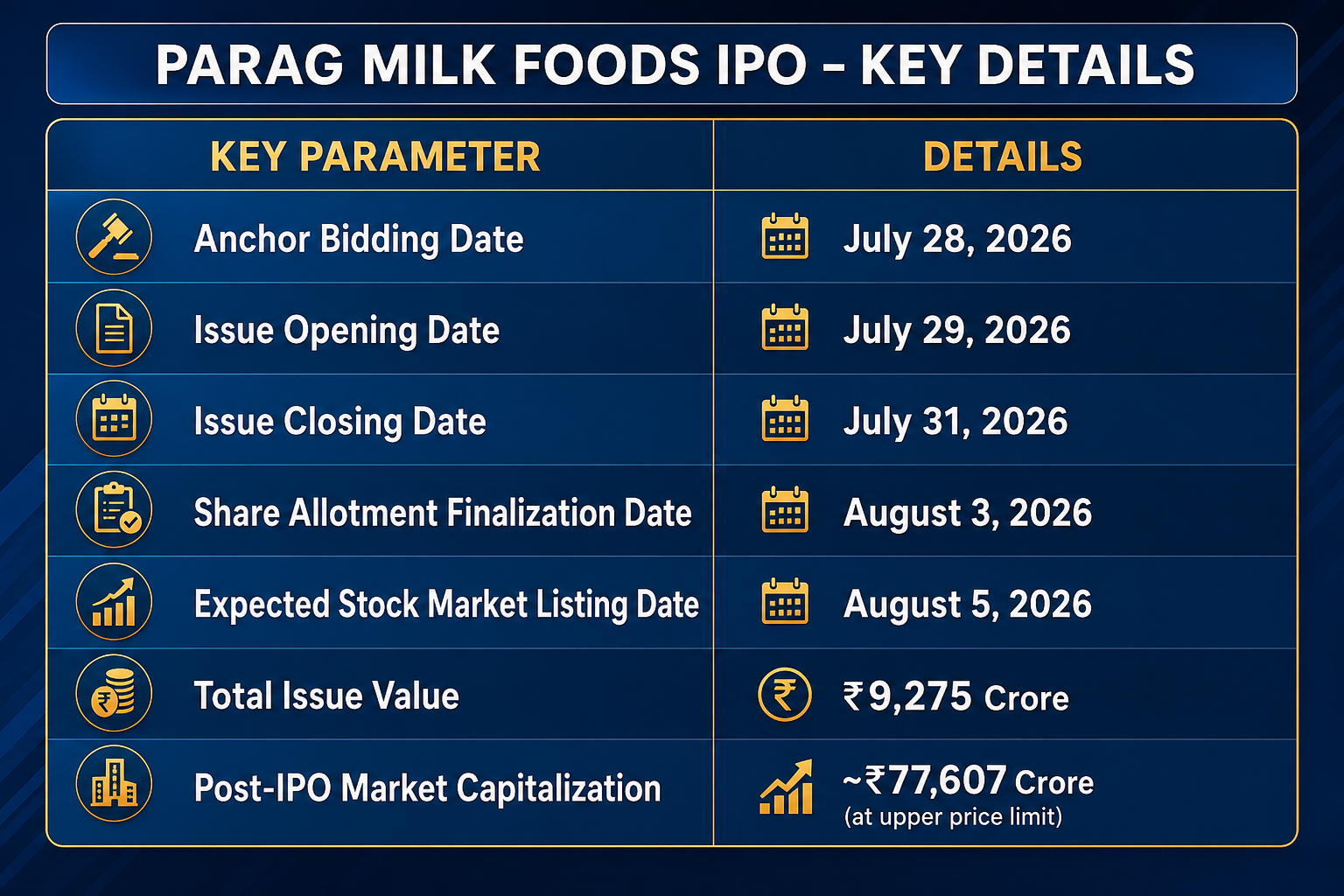
The massive issue is scheduled to open for public subscription on July 29, 2026, and close on July 31, 2026. Prior to the main launch, anchor investors will get their bidding window on July 28, 2026. This offering represents the second-largest mainboard IPO of 2026 so far, right behind SBI Funds Management’s ₹9,795 crore issue.
If you are evaluating this mega-issue, here is a complete, human-written analysis breaking down the core structures, valuation shift, usage of capital, and operational footprint of Manipal Hospitals.
Key Overview of the Offer Structure
The total issue size of ₹9,275 crore is divided into two clear segments: a primary fundraise to fuel growth and debt reduction, and a secondary share sale by existing backers.
Fresh Issue Component: ₹8,000 crore via brand-new equity creation.
Offer-for-Sale (OFS): Up to 2.16 crore equity shares amounting to roughly ₹1,275.2 crore.
Price Band: ₹560 to ₹590 per share.
Lot Size: Minimum bid of 25 equity shares, and in multiples of 25 shares thereafter.
Employee Reservation: Shares worth ₹15 crore are reserved for eligible employees, offering a flat discount of ₹56 per share on the final offer price..
Significant Cut in Offer-for-Sale Size
An interesting aspect of this filing is the significant downscaling of the Offer-for-Sale component compared to earlier regulatory documents.
In the initial draft filings submitted back in March 2026, the selling shareholders had originally intended to offload 4.32 crore equity shares. However, following discussions and the market regulator’s clearance, the final OFS size was trimmed exactly by half to 2.16 crore shares.
The entity group selling equity through this OFS route includes:
Promoter Entities: Imperius Healthcare Investments and Manipal Education and Medical Group India (MEMG).
Institutional Investors: TPG SG Magazine, Seventy Second Investment Company, Ammar Sdn Bhd, Novo Holdings Invest Asia, and Phoenix Bear Investments.
This reduction in secondary sale shares signals that existing financial sponsors and promoter groups are retaining a higher portion of their equity stake post-listing, showing confidence in the long-term potential of the healthcare giant.
Valuation Realignment: What Investors Should Know
When initial public discussions began around the IPO draft, market estimates pegged the overall enterprise valuation closer to the ₹1,000,000 crore (₹1 lakh crore) mark.
However, by establishing the price band at ₹560–₹590 per share, the company’s expected market capitalization sits at approximately ₹77,607.26 crore at the upper cap limit.
This valuation calibration offers a far more grounded entry point for retail and institutional buyers, leaving potentially more room on the table for post-listing performance rather than stretching public multiples upfront.
Strategic Fund Utilization: Becoming Net Debt-Free
The capital brought in through the ₹8,000 crore fresh issue component is destined for clear financial engineering and corporate expansion. Rather than burning funds on speculative initiatives, the company has targeted high-impact areas to strengthen its balance sheet:
Debt Elimination: Over ₹5,300 crore to ₹5,552.8 crore will go directly toward paying off or prepaying high-yield loans, principal borrowings, and accrued interest of primary operating subsidiaries.
Subsidiary Buyouts: Approximately ₹574 crore will fund the acquisition of remaining minority stakes in step-down subsidiary Sahyadri Hospitals.
General Corporate Purposes: The balance will support ongoing working capital requirements and internal growth projects.
Group Chief Financial Officer Samir Agarwal clarified during media briefings that while the Sahyadri acquisition was executed alongside their corporate milestones, the primary objective of this IPO was not designed simply to finance that single transaction. Instead, applying these net fresh proceeds directly against institutional debt will allow Manipal Health Enterprises to transition into a virtually net debt-free entity following listing.
Operational Footprint & Robust Financial Performance
Manipal Hospitals holds the position of the largest pan-India multispecialty hospital network by total bed capacity, and sits as the second-largest hospital network nationwide by total physical unit count.
Operational Reach
Hospitals: 49 network facilities operational as of early 2026.
Bed Capacity: Over 12,600 to 13,037 total licensed beds.
Geographic Presence: Spread across more than 24 tier-1 and tier-2 Indian cities.
Financial Trajectory (FY24 vs. FY26)
The healthcare provider has reported accelerated financial metrics over recent financial years, driven by higher bed occupancy rates, better average revenue per occupied bed (ARPOB), and strategic regional acquisitions.
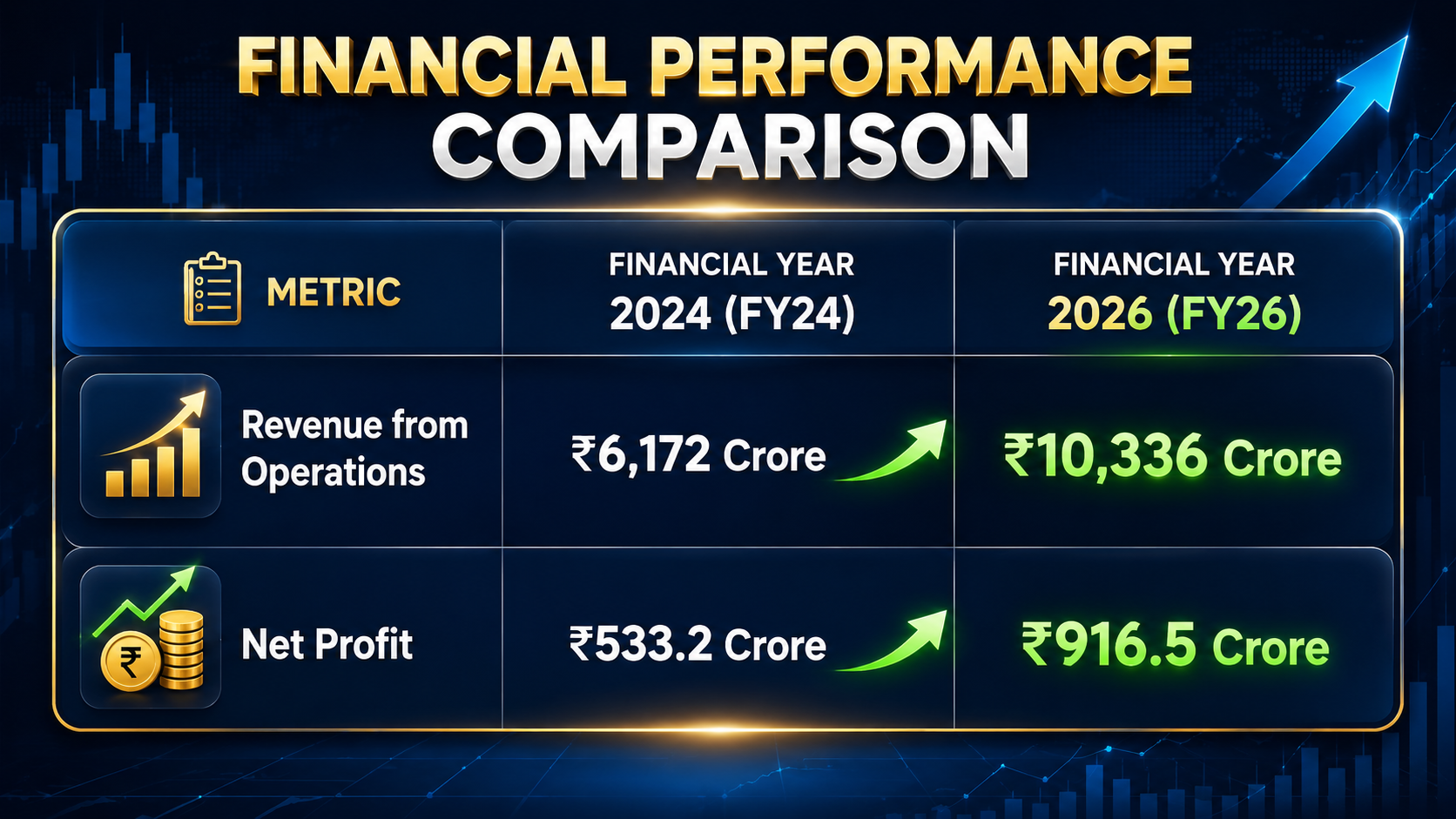
Between FY24 and FY26, operational revenue surged by over 67%, while net profit recorded an impressive jump of nearly 72%. This top-line and bottom-line operational strength gives a strong backdrop to its capital market debut.
Book Running Lead Managers
The public offer is managed by a syndicate of global and domestic investment banks:
Kotak Mahindra Capital Company Limited
Axis Capital Limited
Goldman Sachs (India) Securities Private Limited
Jefferies India Private Limited
J.P. Morgan India Private Limited
UBS Securities India Private Limited
DBS Bank India Limited
Final Thoughts for Retail & Institutional Investors
The Manipal Health Enterprises public offer represents a critical juncture for Indian stock markets and the broader healthcare sector. With a trimmed down OFS, clear utilization plans focused on balance-sheet deleveraging, high revenue growth trajectory, and a moderated valuation compared to early whispers, the issue offers a compelling story.
Investors looking for exposure to India’s growing healthcare demand, rising insurance coverage, and expanding regional medical infrastructure will be watching closely as bidding opens on July.
Disclaimer: The information provided above is for educational purposes only. We strongly advise investors to consult with SEBI-certified financial experts before making any investment decisions.