
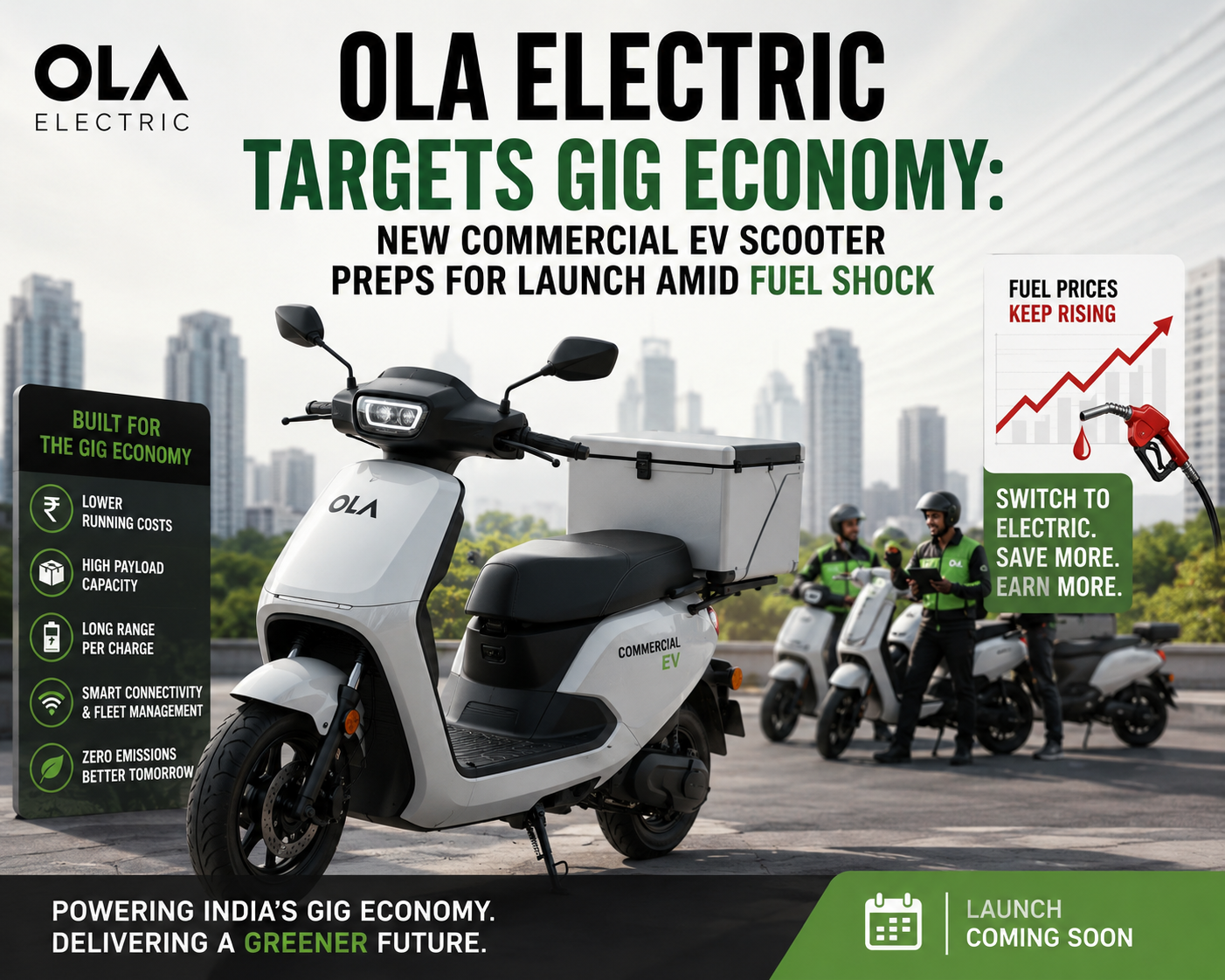
Ola Electric Commercial Scooter: The Indian electric vehicle giant is quietly gearing up to disrupt the commercial two-wheeler market. As fuel prices skyrocket across India due to global supply chain disruptions, Ola Electric has secured a crucial government nod. The Automotive Research Association of India (ARAI) has officially granted homologation certificate approval for a brand-new, commercial-grade electric scooter designed specifically for gig workers, delivery fleets, and quick-commerce operations.
This strategic pivot comes at a time when the gig economy is desperately seeking relief from soaring operational expenses. Based on the proven Ola S1 X Gen3 platform, this upcoming vehicle could land in the market as early as this quarter, marking a major shift from Ola’s traditional direct-to-consumer approach to a high-volume B2B enterprise model.
The Strategic Shift: Why Ola Electric is Targeting Gig Workers
For years, Ola Electric has focused heavily on the premium and mass-market consumer segments with its S1 Pro, S1 Air, and S1 X models. However, the commercial two-wheeler market in India represents an entirely different beast—one driven strictly by unit economics, daily uptime, and total cost of ownership (TCO).
1. The Fuel Shock Catalyst
The timing of this launch is closely tied to macroeconomic pressures. Recent geopolitical tensions around the Strait of Hormuz have triggered global oil supply disruptions, directly translating to a severe fuel shock at Indian petrol pumps. For a typical delivery partner riding 80 to 120 kilometers a day, internal combustion engine (ICE) running costs have become unsustainable.
2. High Utilization and Faster Replacement Cycles
Unlike retail buyers who use their scooters for short daily commutes, gig workers run their vehicles extensively. High daily utilization means the payback period for an electric scooter—where the savings on petrol offset the upfront purchase cost—is achieved dramatically faster. Furthermore, commercial fleets experience rapid replacement cycles, ensuring a steady, recurring order pipeline for manufacturers capable of delivering robust hardware.
Ola Electric Technical Specifications: What We Know So Far
According to the ARAI homologation certificate dated February 20, 2026, which was recently reviewed, the new commercial vehicle is built with practical utility and fleet optimization in mind.
| Feature | Specification Details |
| Vehicle Category | L1-Category Battery-Operated Scooter |
| Base Platform | Ola S1 X Gen3 Platform |
| Battery Configurations | 2 kWh, 3 kWh, and 4 kWh variants |
| Motor Type | AC Permanent Magnet Synchronous Motor (PMSM) |
| Peak Power Output | 3.93 kW (Approx. 4 kW) |
| Top Speed | ~70 kilometers per hour |
| Seating Capacity | Certified for two riders |
By offering multiple battery configurations (2 kWh to 4 kWh), Ola is giving fleet operators the flexibility to choose between lower upfront procurement costs or an extended range for long-shift delivery riders. The choice of an AC PMSM motor ensures high efficiency and sustained thermal management, crucial for Indian summers and heavy stop-and-go delivery traffic.
Policy Tailwinds: The Delhi EV Policy 2026 Effect
Ola Electric’s commercial market entry is further supported by aggressive regulatory shifts at the state level. Most notably, Delhi’s draft EV Policy 2026 outlines a strict roadmap that proposes completely phasing out new registrations of petrol-powered two-wheelers within the next two years for commercial fleets.
“Policy momentum is building fast. If major metros like Delhi, Bengaluru, and Mumbai mandate 100% electric adoption for delivery aggregators, fleet operators will have no choice but to transition immediately. Ola is positioning its production lines to absorb this sudden surge in commercial demand.”
If other states follow Delhi’s legislative blueprint, the market for internal combustion delivery bikes will evaporate, leaving a massive vacuum that Ola intends to fill.
Cracking the Commercial Ecosystem: Challenges and Opportunities
While entering the commercial segment unlocks massive volume potential, it requires an entirely different ecosystem than selling to retail customers. Aggregators look closely at parameters like fleet management software integration, physical durability, and charging infrastructure access.
Fleet Management and Software Integration
Commercial operators need real-time data tracking. Ola’s existing proprietary software stack will likely be customized to offer logistics managers deep insights into battery health tracking, real-time GPS location, geo-fencing, and driver behavior analytics.
Heavy-Duty Structural Modifications
While the ARAI filing indicates that the scooter uses the S1 X Gen3 architecture, commercial operations require rugged builds. Industry insiders expect modifications such as:
Reinforced rear sub-frames to support heavy delivery boxes.
Heavy-duty dual rear shock absorbers.
Flat floorboards optimized for carrying cargo.
Highly durable, scratch-resistant body panels rather than premium glossy finishes.
The Charging Infrastructure Network
For gig workers, downtime is lost revenue. While Ola has built a widespread Hypercharger network, commercial success will depend on how seamlessly delivery riders can top up their batteries during mid-day breaks. This might pave the way for dedicated charging hubs near major dark stores and fulfillment centers.
Competitive Landscape: The Battle for India’s Delivery Fleets
Ola Electric’s entry into this segment will turn up the heat on established players and specialized commercial EV startups. Companies like TVS (with variants of the iQube), Hero MotoCorp-backed Ather Energy, and B2B-focused startups like River, Zypp Electric, and Yulu have already been carving out shares in the delivery space.
However, Ola holds a distinct structural advantage: Scale.
Thanks to its massive Futurefactory facility in Tamil Nadu, Ola Electric can leverage massive vertical integration, localized battery pack manufacturing, and sheer manufacturing scale to price its commercial variants aggressively. This cost advantage is critical when negotiating bulk procurement contracts with quick-commerce giants, food delivery platforms, and courier syndicates.
Market Implications for the Gig Economy
The introduction of a dedicated commercial scooter from India’s largest EV manufacturer could accelerate the democratization of green logistics. For the thousands of gig workers across food delivery and quick-commerce platforms, transitioning to a structured 3.93 kW electric platform means significantly improved take-home earnings due to drastically lower per-kilometer running costs.
Although Ola Electric’s founder and chairman Bhavish Aggarwal recently acknowledged the surging interest from gig workers on social media without explicitly announcing the new model, the ARAI documentation makes it clear that the launch is imminent.
With regulatory approvals secured, production-ready specifications locked in, and a pressing economic need driven by global fuel shocks, Ola Electric appears fully poised to transition from a consumer lifestyle brand into the heavy-duty engine powering India’s rapidly growing commercial delivery ecosystem.