
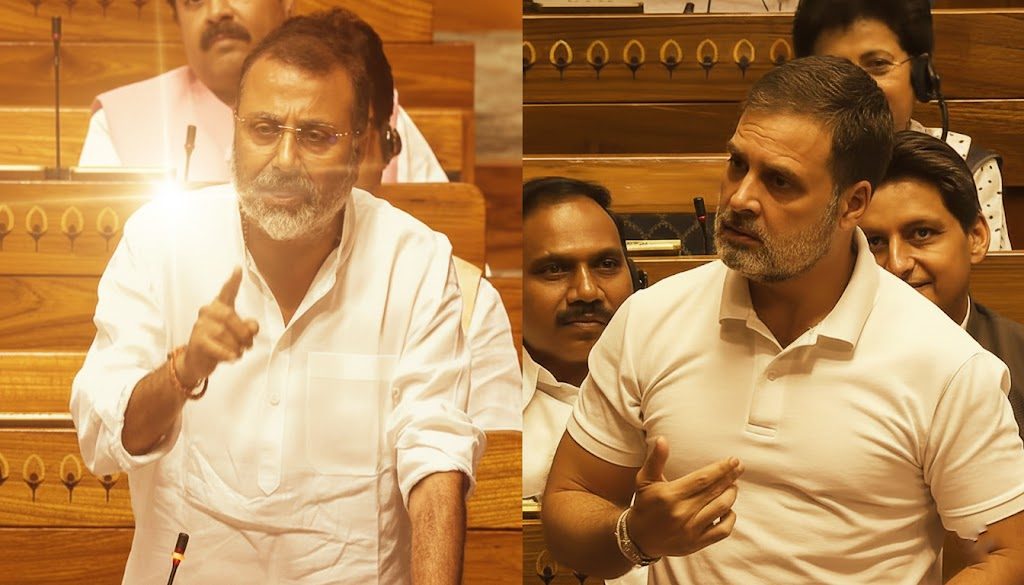
New Delhi | February 12, 2026 —Rahul Gandhi Parliament on the Brink: The hallowed halls of the Lok Sabha have transformed into a theater of unprecedented procedural warfare. In a move that could redefine the boundaries of parliamentary opposition, the Bharatiya Janata Party (BJP) has initiated a dual-pronged assault against Leader of the Opposition (LoP) Rahul Gandhi.
The confrontation, which began with a row over leaked videos and trade deal critiques, has escalated into a formal bid by BJP MP Nishikant Dubey to not only expel Gandhi from the House but to bar him from contesting elections for life.
The Catalyst: Trade Deals and “Epstein Files”
The current firestorm was ignited on February 11, during a high-octane Budget discussion. Rahul Gandhi launched a blistering attack on the government’s interim trade deal with the United States, alleging that the Modi administration had “sold the nation” by buckling on tariffs and handing over sensitive digital data to American interests.
The rhetoric turned deeply personal when Gandhi aimed directly at Union Minister Hardeep Singh Puri, making sensational allegations involving the “Epstein Files.” Furthermore, the circulation of an allegedly unpublished book by former Army Chief General M.M. Naravane became a fresh point of contention, with the BJP accusing Gandhi of compromising national security and the dignity of the armed forces.
Rahul Gandhi From Privilege to Substantive Motion: The Legal Gambit
While Parliamentary Affairs Minister Kiren Rijiju initially suggested a Privilege Motion against Gandhi for “misleading the House,” BJP firebrand Nishikant Dubey upped the ante by submitting a Substantive Motion.
Unlike a privilege motion, which typically deals with specific breaches of conduct, a substantive motion is a self-contained proposal that requires a formal debate and a compulsory vote. Dubey’s notice is a scathing indictment, labeling Gandhi as part of a “Thuggery Gang” aimed at destabilizing India.
Key Allegations in the Substantive Motion:
- Foreign Influence: Dubey alleges Gandhi is an “active conduit” for organizations like the Soros Foundation, Ford Foundation, and USAID.
- Institutional Attack: The notice claims Gandhi has used Parliament to “foment public sentiments” against the Supreme Court and the Election Commission.
- Armed Forces: The BJP accuses Gandhi of “cunningly dragging” the name of General Naravane for political mileage.
- Disqualification: Dubey explicitly demanded the “cancellation of membership” and a lifelong ban on contesting polls.
The “Video Row” and the Speaker’s Chamber
Adding fuel to the fire, Minister Kiren Rijiju released footage alleging that on February 4, Congress MPs “barged” into the Lok Sabha Speaker’s chamber and behaved inappropriately. This occurred on the same day Prime Minister Narendra Modi was scheduled to address the House.
The BJP characterizes this as an assault on the dignity of the Chair, while the Congress has dismissed the videos as “diversionary tactics” intended to mask the government’s discomfort over the trade deal revelations.
The Congress Defiant: “Hang Us if You Want”
The Congress leadership has responded with a mixture of defiance and indignation. General Secretary K.C. Venugopal lashed out at the government, accusing the Chair of “double standards” after several portions of Gandhi’s speech were expunged from the records, while similar remarks by Finance Minister Nirmala Sitharaman remained untouched.
“We are not bothered about any motions. If you want to hang us, we are ready for that,” Venugopal told reporters. “The people elected Rahul Gandhi with a bigger margin than Modi ji. We will continue to tell the truth.”
The Opposition has also taken the “extreme position” of submitting a notice for the removal of the Lok Sabha Speaker, claiming they are “not getting justice from the Chair.”
Procedural Hurdles and Expert Opinions
Despite the BJP’s aggressive stance, constitutional experts warn that the road to expulsion is legally fraught. Former Lok Sabha Secretary General P.D.T. Achary clarified that while the House has the power to expel a member for contempt, it does not possess the authority to “disqualify” them for life.
“Disqualification takes place only under the Anti-Defection Law and the Representation of the People Act,” Achary noted, questioning which specific rule Dubey’s motion would fall under.
A High-Stakes Showdown
As the Delhi Police Special Cell continues its probe into the “unpublished book” row—questioning the team at Penguin India—the political battle shows no signs of cooling. This is not Gandhi’s first brush with disqualification; his 2023 removal following a defamation conviction remains a fresh memory.
However, the current bid for a “life-long ban” marks a new, more aggressive phase of Indian politics where procedural tools are being used as weapons of ultimate political elimination. With a no-confidence motion against the Speaker and a substantive motion against the LoP, Parliament remains a house divided, and the coming days are likely to see one of the most intense constitutional standoffs in the nation’s history.
Disclaimer: This information is based on various inputs from news agency.