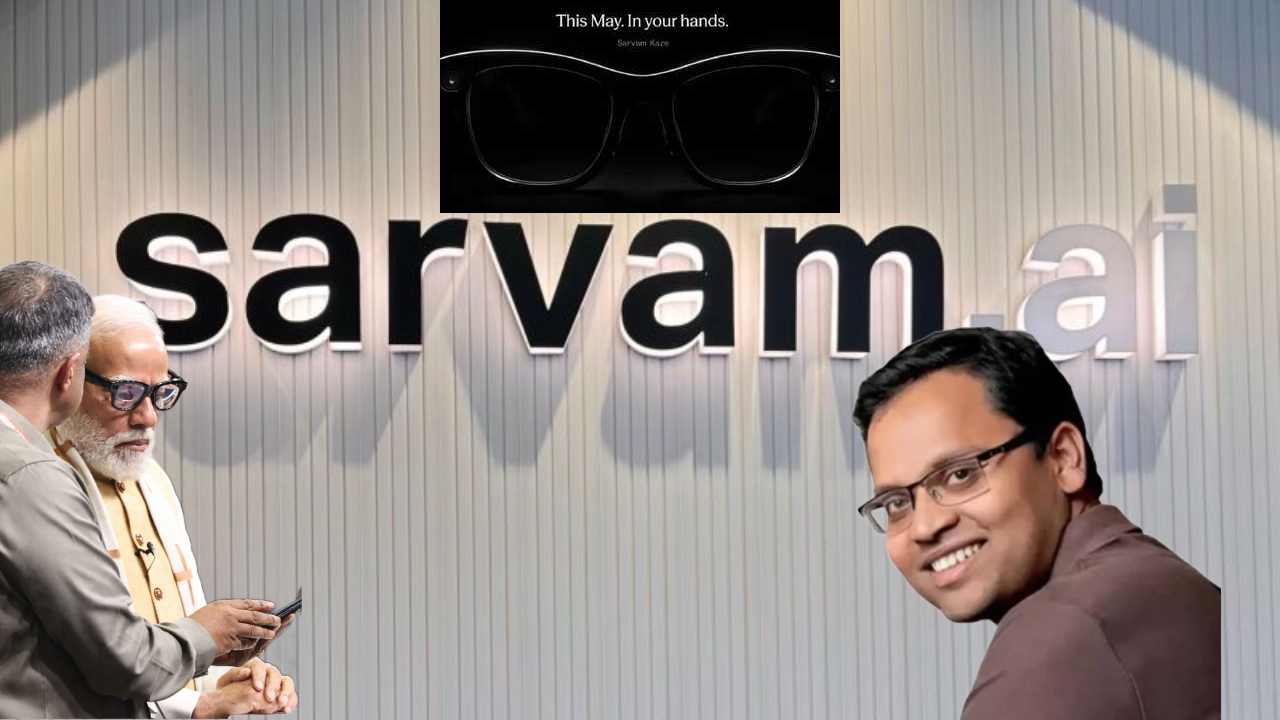
“Sarvam Kaze Smart Glasses: The landscape of wearable technology is witnessing a historic shift. For years, Silicon Valley has dictated the rhythm of innovation, but at the AI Summit 2026 in Bharat Mandapam, Delhi, a new contender emerged from the heart of India. Sarvam Kaze, the brainchild of Sarvam AI, has transitioned from a viral social media sensation—sparked by Prime Minister Narendra Modi trying them on—to a serious technological milestone.
As Sarvam AI co-founder Pratyush Kumar prepares for a May 2026 launch, the tech world is asking one critical question: How does this “Made-in-India” wearable stack up against the reigning champion, the Meta Ray-Ban Smart Glasses?
“Sarvam Kaze Smart Glasses: The Visionary Behind the Lens, Why Sarvam Kaze Matters
During his conversation with NDTV’s Shiv Aroor, Pratyush Kumar highlighted a fundamental truth: “India doesn’t only work on a desk; it also works on the move.” While Meta Ray-Ban focuses heavily on the lifestyle and creator economy—capturing POV videos for Instagram and streaming music—Sarvam Kaze is being built as a “Builder’s Device.” It is designed specifically for the Indian workforce, focusing on productivity, localized utility, and high-stakes field operations.
Detailed Comparison: Sarvam Kaze vs. Meta Ray-Ban
| Feature | Sarvam Kaze (India) | Meta Ray-Ban (Global) |
| Origin | Designed & Manufactured in India | Designed by Meta, Frames by Luxottica |
| AI Model | Sovereign Indian AI (Sarvam Edge Models) | Meta AI (Llama 3 integration) |
| Primary Use | Enterprise, Field Work, Inclusion | Content Creation, Lifestyle, Audio |
| Language Support | Deep Multilingual (Hindi, Gujarati, etc.) | Primarily English (Expanding) |
| Launch/Price | May 2026 / TBA | Available / ₹29,900 – ₹39,900 |
| Ecosystem | Open for Developers | Closed Meta Ecosystem |
Key Features and Specifications
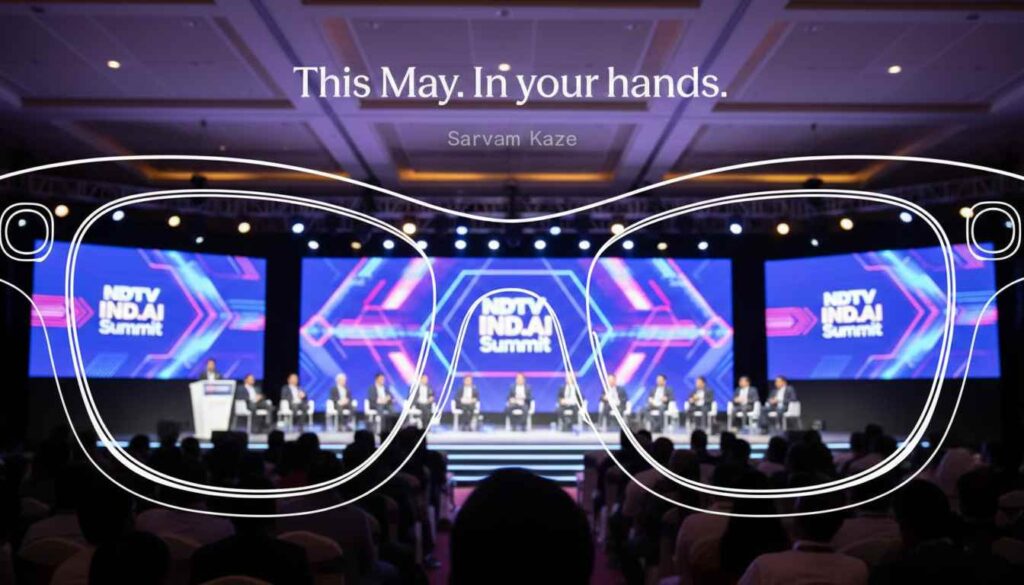
1. The Power of “Sovereign AI”
The biggest differentiator for Sarvam Kaze is the underlying intelligence. Unlike Meta, which relies on its global Llama models, Sarvam Kaze utilizes Sovereign AI models.
Localized Context: These models are specifically tuned for Indian dialects and cultural nuances. (Infamously, PM Modi asked, “Does it speak Gujarati?”—a feat Sarvam aims to master across all scheduled Indian languages).
Edge Computing: Sarvam is using “edge models” that take up only a few megabytes. This allows the glasses to process information locally on the device, ensuring privacy and faster response times even in areas with poor connectivity.
2. Hardware and Partnership Ecosystem
Sarvam isn’t working in a vacuum. They have strategically aligned with global hardware giants to ensure the Kaze is world-class:
Qualcomm Collaboration: The glasses are tuned for Qualcomm’s latest chipsets, ensuring high performance with low power consumption.
HMD Global Connection: By partnering with HMD (the makers of Nokia phones), Sarvam is ensuring that their AI tech isn’t just for the elite but can eventually sync with affordable feature phones.
Design: Early teases show a sleek, “everyday” frame that avoids the bulky “cyborg” look of early smart glasses, making them wearable for 8-10 hours a day.
3. Professional and Social Impact
While you can use Sarvam Kaze for navigation and audio, its true power lies in its “Work-on-the-Move” capabilities:
The Census 2027 Tool: There is a strong possibility of these glasses being deployed for India’s first fully digital census, allowing officials to capture data hands-free.
Assistive Technology: For the visually impaired, the Kaze acts as an interpreter, reading out text from signs, medicine bottles, or books in real-time.
Field Inspections: Engineers and sales teams can get “visual assistance,” where the AI overlays instructions on how to repair a machine or identifies products in a warehouse.
Meta Ray-Ban: The Lifestyle Benchmark
To understand the challenge ahead, we must look at what Meta offers. The Meta Ray-Ban Gen 2 is currently the gold standard for consumer wearables:
Camera: 12MP Ultra-wide camera capable of 1080p (and up to 3K in pro modes) video recording.
Audio: Five-mic system for immersive audio and crystal-clear voice calls.
Charging: A sleek charging case that provides up to 36 hours of total use.
AI: Meta AI can identify landmarks, translate menus, and even suggest outfits based on what the camera sees.
Sarvam Kaze will need to match this hardware finesse while beating Meta on local utility and open-source developer access.
Strategic Shift: From Enterprise to Consumer
Initially, Sarvam AI focused on voice-focused models for customer support (B2B). However, the Kaze represents a pivot toward the consumer and professional individual.
By working with Bosch to integrate AI assistants into cars and Qualcomm for “Sovereign AI Experience Suites,” Sarvam is building a web of intelligence that follows the user from their phone to their car, and finally to their glasses.
Why the “Made-in-India” Label Matters
In the era of data privacy and “AI Nationalism,” having a device that processes data on Indian soil (Sovereign AI) is a significant security advantage.
Data Privacy: Data doesn’t need to travel to servers in Oregon or Dublin.
Cost Efficiency: Local manufacturing and specialized edge models could potentially make Sarvam Kaze more affordable for the Indian middle class compared to the imported Meta glasses.
Offline Capability: Sarvam’s focus on megabyte-sized models means many features will work offline, a critical requirement for rural India.
Conclusion: The May 2026 Launch
The Sarvam Kaze isn’t just a gadget; it’s a statement of intent. It represents India’s transition from being a consumer of global AI to a creator of specialized, sovereign technology. While Meta Ray-Ban currently leads in style and social integration, Sarvam Kaze is positioning itself as the “utility belt” for the modern Indian worker and the differently-abled.
As we approach the May 2026 launch, all eyes will be on the final pricing and the “Liquid Glass” interface performance. If Sarvam can deliver a high-quality camera and seamless multilingual AI at a competitive price, it won’t just be a “local alternative”—it could be the new global blueprint for functional AI wearables.
What to Watch Out For:
Final Battery Life: Will it sustain a full workday (8+ hours)?
Developer Apps: How many Indian startups will build custom “skills” for the Kaze?
The PM Modi Factor: Expect significant government push for adoption in public sectors.