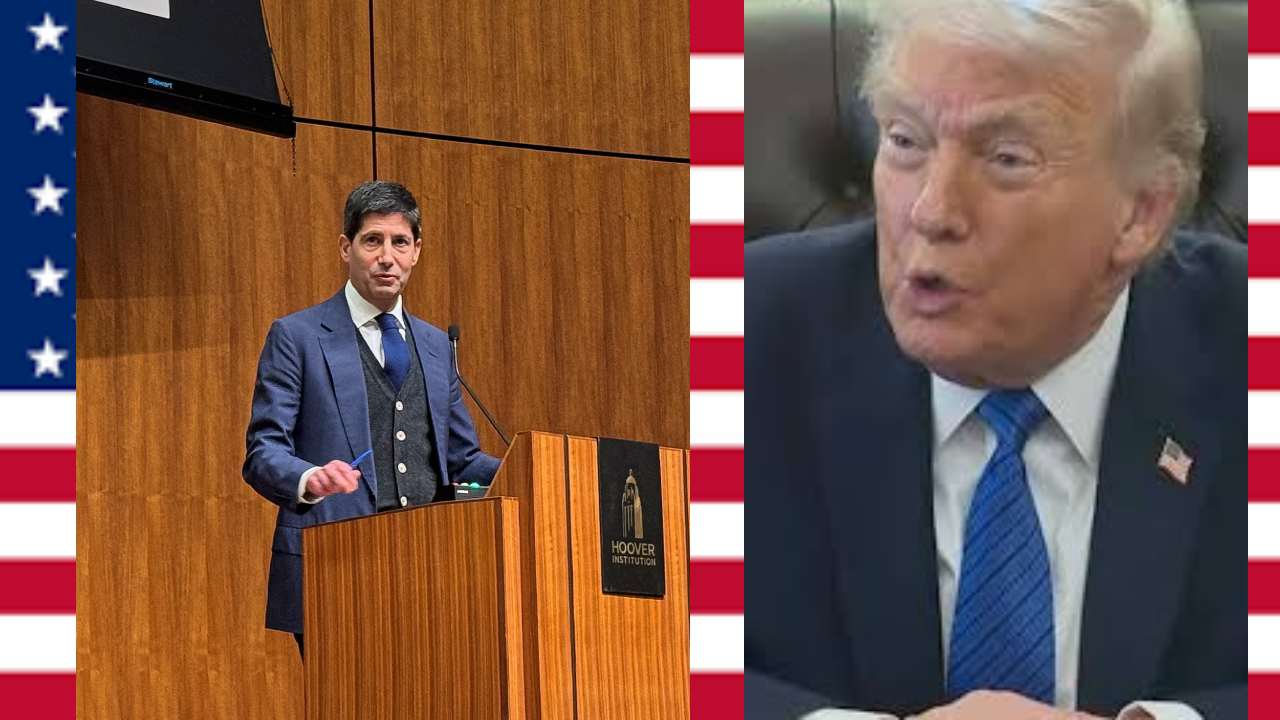
Trump’s “Golden” Shake-Up: Kevin Warsh and the Battle for the Federal Reserve. The global financial landscape was rocked on Friday, January 30, 2026, as President Donald Trump officially nominated Kevin Warsh to succeed Jerome Powell as the Chairman of the Federal Reserve. The announcement sent immediate shockwaves through the markets, triggering a historic sell-off in precious metals and leaving investors to grapple with a new era of “Trumpian” monetary policy.

For years, Trump has been vocal about his desire to see significantly lower interest rates and a more “cooperative” central bank. With the nomination of Warsh, a former Fed Governor and Wall Street veteran, he appears to have made his first major move toward seizing control of the world’s most powerful financial institution.
Who is Kevin Warsh?
To understand the market’s jittery reaction, one must look at the man behind the name. At 55, Kevin Warsh is far from a political outsider, yet he is far from a traditional academic economist.
- A “Markets Guy” over a Ph.D.: Unlike most of his predecessors, Warsh does not hold a doctorate in economics; he is a Harvard-educated lawyer. This “markets-first” perspective was honed during his years as an executive at Morgan Stanley.
- The Youngest Governor: In 2006, at the age of 35, Warsh became the youngest person ever appointed to the Federal Reserve Board of Governors. During the 2008 financial crisis, he served as a critical liaison between the Fed and Wall Street, earning a reputation as a savvy “crisis fighter.”
- The Hawkish Turn and Resignation: Historically, Warsh was known as an “inflation hawk”—someone who favors higher interest rates to keep prices stable. He famously resigned from the Fed in 2011 in protest against the central bank’s aggressive bond-buying programs (Quantitative Easing), which he feared would debase the dollar.
- The Trump Transformation: In recent months, Warsh has shifted his rhetoric. He has publicly echoed Trump’s frustrations with the current Fed leadership, arguing that the institution is “broken” and that productivity gains from AI could justify lower interest rates despite persistent inflation.
Why the Markets are Shaking
The reaction to Warsh’s nomination was swift and brutal. Investors are currently weighing two primary risks: the loss of Fed independence and the threat of accelerated rate cuts.
- The Precious Metals Crash
In a historic rout on January 30, the “safe haven” trade collapsed. Gold prices plummeted by as much as 16%, dropping toward the $5,000 mark, while Silver futures crashed by a staggering 39% in a single session—its worst day since the 1980s.
This crash was triggered by a surging U.S. Dollar. Investors interpreted the Warsh pick as a signal for “regime change” at the Fed. If Warsh aggressively shrinks the Fed’s $6.6 trillion balance sheet while pushing for Trump-aligned growth policies, real interest rates could rise, making non-yielding assets like gold and silver much less attractive.
- Wall Street’s Jitters
U.S. stocks fell in early trading as the “Trump Risk” became tangible. While some on Wall Street view Warsh as a “conventional” and credible choice compared to more radical candidates, there is a deep fear that he will serve as a “sock puppet” for the White House. If the Fed begins to cut rates based on political pressure rather than economic data, it could reignite inflation, leading to long-term economic instability.
The Goal: Controlling the Fed
For Donald Trump, this nomination is about more than just interest rates; it is about power. Central banks are designed to be insulated from political whims to ensure a stable currency. By nominating a candidate who has recently aligned with his “America First” economic vision, Trump is challenging that 75-year-old precedent.
The stakes are high. As one X user noted, “This is not about economics. This is about controlling the Fed.” If Warsh bows to the President’s demand for 1% interest rates (down from the current 3.6%), the U.S. could see a temporary boom followed by a catastrophic inflationary spiral.
What’s Next?
Kevin Warsh now faces a grueling confirmation process in the Senate. He will need to prove to skeptical lawmakers—and the global markets—that he can maintain his independence once he takes the gavel. If confirmed, he is expected to take office in mid-May 2026.
Until then, the financial world remains on edge. The “Golden” era of stability may be over, replaced by a volatile “Hall of Illusion” where political influence and market forces are on a collision course.
- The Senate Confirmation Hearings: A High-Stakes Grill
Before Kevin Warsh can take the gavel from Jerome Powell in May 2026, he must survive the Senate confirmation process. This is not just a formality; it is an intense vetting period where his past views and current loyalties will be under the microscope.
The Timeline
- The Committee Phase (February/March 2026): Warsh will first appear before the Senate Banking Committee. This is where the most aggressive questioning happens. Expect Senators to grill him on whether he will be an “independent” chair or a “rubber stamp” for President Trump’s demands.
- The “Tillis Blockade”: Currently, Republican Senator Thom Tillis has threatened to hold up the nomination until a separate federal investigation into the Fed’s building renovations is resolved. This could delay the vote into late March or April.
- Full Senate Vote (April 2026): If he passes the committee, the full Senate must confirm him by a simple majority. Given the Republican-controlled Senate, he is expected to pass, but the margin will signal how much trust the “establishment” has in his new vision.
Key Questions He Will Face:
- “Inflation Hawk or Trump Dove?”: Senators will ask how he reconciles his past as an inflation fighter with his recent support for Trump’s calls for lower rates.
- Independence: He will be asked point-blank if he would hike rates against the President’s wishes if inflation spiked to 4% or 5%.
- “Balance Sheet Reduction” and Your Mortgage
While most people focus on the Federal Funds Rate (the short-term rate the Fed controls), your mortgage is actually influenced more by the Fed’s Balance Sheet.
During the pandemic, the Fed bought trillions of dollars in Mortgage-Backed Securities (MBS) to keep housing costs low. Warsh has been a vocal critic of this, calling it “mission creep.” He wants to “shrink the balance sheet” rapidly—which means the Fed would stop being a buyer of these mortgage bonds.
How it Affects Your Mortgage Rates:
- The Supply Shock: When the Fed stops buying (or starts selling) its mortgage bonds, the market becomes flooded with “supply.” To attract new private buyers (like banks or hedge funds), these bonds must offer higher yields.
- The Rate Hike: Since mortgage rates for homeowners are tied directly to these yields, your 30-year fixed-rate mortgage could actually go up, even if the Fed cuts its short-term interest rates.
- The “Warsh Paradox”: Trump wants Warsh to cut rates to make life “affordable,” but if Warsh simultaneously aggressively shrinks the balance sheet, he might inadvertently push mortgage rates higher by removing the Fed’s support for the housing market.
The Real-World Impact:
If Warsh moves too fast, we could see a scenario where the “Fed Rate” is low (good for credit cards), but the “Mortgage Rate” stays high (bad for homebuyers). Industry experts at the Mortgage Bankers Association (MBA) are watching this closely, as a sudden exit by the Fed could cause “volatility” and make it harder for lenders to offer competitive rates.
Final Verdict: Is it a “Wash”?
For the average consumer, the “Warsh Fed” represents a trade-off. You might see lower interest rates on your car loan or credit cards if he follows Trump’s lead. However, your home-buying power could be squeezed if his “shrink the balance sheet” philosophy wins out.
Disclaimer: This information is based on various inputs from news agency.