
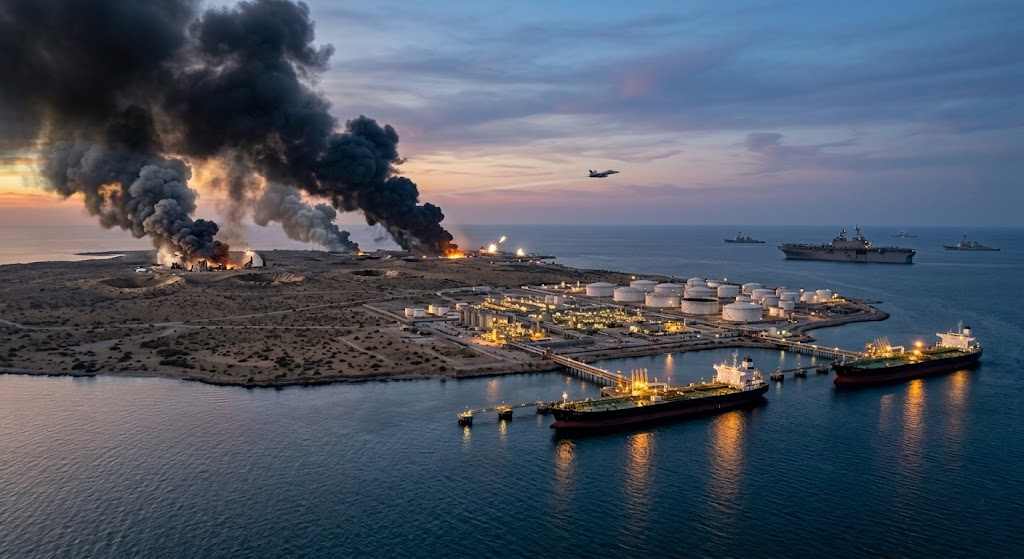
TEHRAN / WASHINGTON D.C. — US Strikes Kharg Island: The third week of the US-Israel war on Iran has reached a harrowing crescendo. On Friday night, the United States launched what President Donald Trump described as “one of the most powerful bombing raids in the history of the Middle East,” targeting military installations on Iran’s Kharg Island.
While the strike intentionally spared the island’s massive oil infrastructure for now, the message was clear: the world’s energy lifeline is currently being held hostage by the threat of total destruction. As the smoke clears over the Persian Gulf, the global economy is reeling, with crude oil prices surging more than 40% since the commencement of hostilities on February 28.
The Strike: 90 Targets”Totally Obliterated”
Black Gold and Ballistic Fire: US Strikes Kharg Island as Global Oil Crisis Deepens: According to US Central Command (CENTCOM), the operation was a large-scale precision strike involving a sophisticated array of aerial assets. CENTCOM officials confirmed that over 90 Iranian military targets were successfully neutralized.
The Pentagon released a muted, one-minute black-and-white video showing missiles raining down on the “scrubby stretch of land” located roughly 30 kilometers off the Iranian mainland. The primary objectives of the raid included:
- Naval Mine Storage Facilities: Designed to cripple Iran’s ability to mine the Strait of Hormuz.
- Missile Storage Bunkers: Housing the advanced projectiles Iran uses to threaten regional US bases.
- Air Defense Systems: Targeted to ensure continued US and Israeli air superiority.
- Naval and Airport Infrastructure: To limit the Iranian Revolutionary Guard Corps (IRGC) mobility.
In a characteristically bold post on Truth Social, President Trump claimed the military targets were “totally obliterated,” though he noted a strategic restraint regarding the oil terminals themselves. “I have chosen not to ‘wipe out’ oil infrastructure on the Iranian island, for now,” Trump wrote. However, he warned that any further interference with the “Free and Safe Passage of Ships through the Strait of Hormuz” would lead him to “immediately reconsider this decision.”
Iran’s Defiance: “A Pile of Ashes”
Black Gold and Ballistic Fire: US Strikes Kharg Island as Global Oil Crisis Deepens :The rhetoric from Tehran has been equally scorched-earth. Following the strikes, Iran’s armed forces issued a chilling ultimatum. If the US or Israel moves to damage the actual oil-producing structures on Kharg Island, Iran warned it would reduce every US-linked oil facility in the region—including those belonging to companies cooperating with Washington—to a “pile of ashes.”
Despite the heavy bombardment of military sites, Iranian state media outlet IRNA reported that oil exports from the island are continuing “normally.” This claim is vital for Tehran, as Kharg Island handles over 90% of Iran’s oil exports, roughly 1.55 million barrels per day (bpd), with much of it destined for China.
“The Iranians are keeping the oil card as their final play,” says Al Jazeera’s Mohamed Vall. “They have been talking about restraint, but that restraint ends the moment the pumps stop or the tanks explode. It is a catastrophic scenario for the entire global industry.”
The Global Economic Fallout: $100+ Oil?
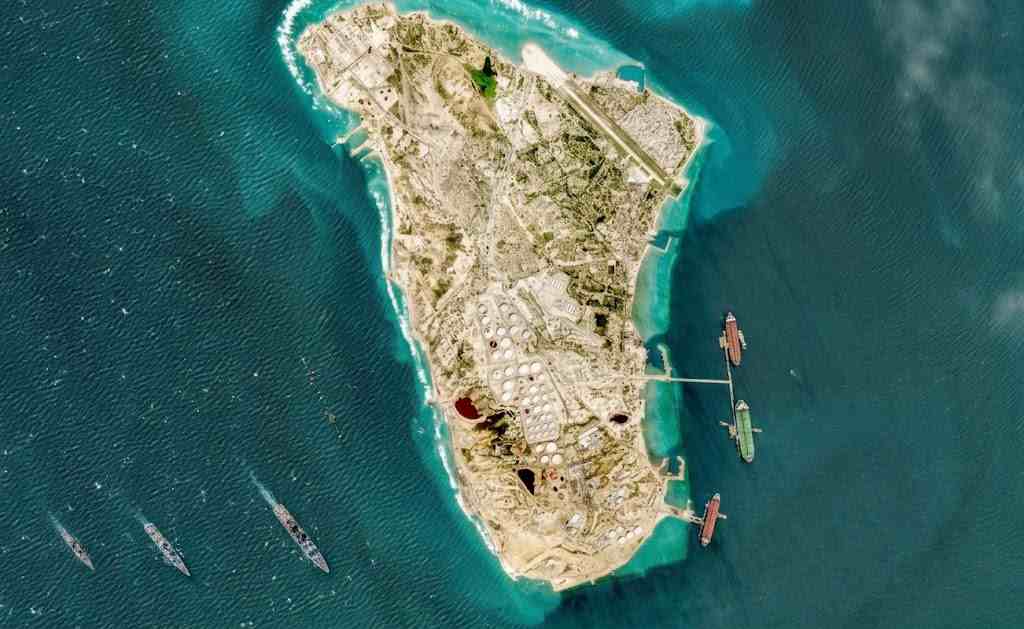
The war has already sent shockwaves through the global markets. With 20% of the world’s oil flowing through the Strait of Hormuz—which Iran has all but shut down—energy supplies to Asia and the West are in a state of high-intensity disruption.
| Statistic | Impact / Value |
| Oil Price Surge | Over 40% increase since Feb 28 |
| Kharg Export Volume | 1.55 million barrels per day |
| Global Oil Flow | 20% passes through the Strait of Hormuz |
| Storage Capacity | ~30 million barrels on Kharg Island |
Analysts like Patrick De Haan from GasBuddy warn that Iran, when backed into a corner, becomes “highly emboldened.” The fear is that a cornered Tehran might decide that if it cannot export its oil, no one in the Gulf will be allowed to either.
Humanitarian Toll and Military Escalation
While the world watches the oil tickers, the human cost on the ground is devastating. Iran’s Ministry of Health reports that at least 1,444 people have been killed and over 18,000 injured since the conflict began. The UN refugee agency (UNHCR) estimates that a staggering 3.2 million people have been internally displaced within Iran.
The military posture of the United States suggests a long-term engagement. Reports indicate that:
- Reinforcements: 2,500 additional Marines are being deployed to the region.
- Amphibious Assault: The USS Tripoli and elements of the 31st Marine Expeditionary Unit have been ordered to the Middle East.
- Intensity: The Pentagon claims US and Israeli forces have struck more than 15,000 targets across Iran in just two weeks, including sites in Tehran, Isfahan, and Tabriz.
Trump Dismisses the Prospect of a Deal
Despite the escalating violence, President Trump has remained firm on his stance against a diplomatic exit ramp. He dismissed reports that Tehran was looking for a “deal,” stating he would not accept any terms currently on the table. He urged Iran to “lay down their arms and save what’s left of their country.”
However, Iranian officials are not signaling surrender. The IRGC has spoken of deploying its most advanced weaponry, including Heidar missiles, to target Israeli territories and US bases in the region.
A Region on the Brink
The strike on Kharg Island represents a precarious middle ground. By hitting the military assets but sparing the oil, the US is attempting a “maximum pressure” tactic without triggering a total global economic collapse. Yet, as Zeidon Alkinani of Georgetown University notes, the rhetoric has shifted from “potential compromise to continued hardline positions.”
Both sides are dug in. With the deployment of the USS Tripoli and Iran’s “pile of ashes” threat, the world is witnessing the most dangerous game of brinkmanship in the 21st century.