

The Yamaha Aerox-E has officially landed on Indian shores, and it is completely redefining what we expect from an electric two-wheeler. For years, the Indian electric vehicle (EV) market has been heavily focused on mass-market practicality, commuter-friendly floorboards, and budget-conscious pricing. Yamaha India just threw that playbook out the window. By introducing their flagship performance electric maxi-scooter at an introductory price of ₹2.81 lakh (ex-showroom), they have targeted an exclusive, enthusiast-driven niche that values adrenaline and engineering over raw, cost-per-kilometer utility.
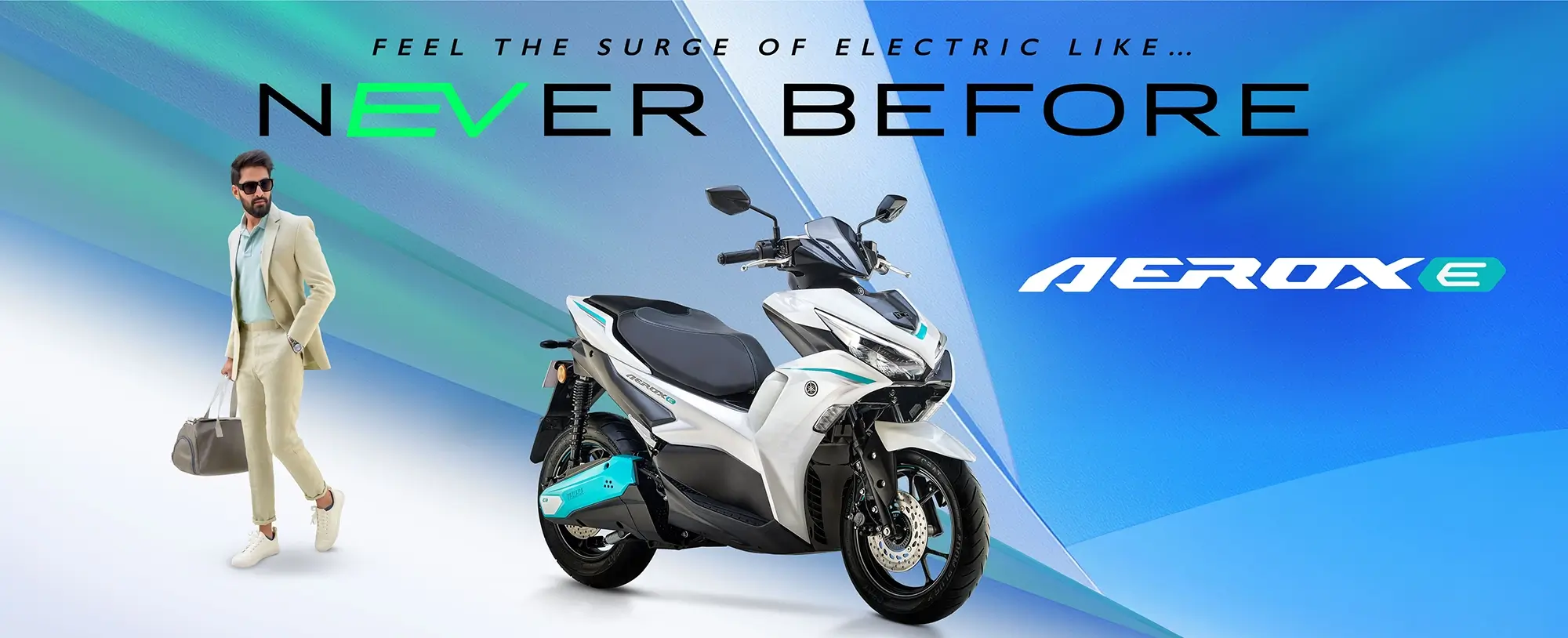
If you are familiar with the petrol-powered sibling, the critically acclaimed Aerox 155, you already know the pedigree we are dealing with. The new electric variant retains that unmistakable, aggressive maxi-scooter silhouette while swapping out the liquid-cooled internal combustion engine for a high-performance electric drivetrain.
Is the market ready for a scooter that costs nearly double its petrol counterpart? Let’s dive deep into the full specifications, design elements, technology suite, and market strategy to see exactly what this high-voltage machine brings to the table.
1. Preserving the Aggressive Maxi-Scooter DNA
One of the most comforting aspects of the new electric flagship is its visual identity. Yamaha didn’t try to reinvent the wheel by giving it a fragile, hyper-futuristic look that feels alien on Indian roads. Instead, the scooter shares almost every body panel, aerodynamic crease, and structural attribute with the standard Aerox 155.
You get the iconic non-step-through design featuring a prominent central spine. This structural choice means you won’t be carrying groceries or gas cylinders between your feet, but it ensures incredible chassis rigidity and high-speed stability that standard step-through scooters simply cannot replicate. The front fascia maintains its muscular, layered apron layout flanked by sharp, twin LED headlights and integrated daytime running lamps. Around the back, a sleek LED tail-lamp assembly rounds out its track-inspired aesthetic.
However, look closer and you will spot subtle markers signaling its electric nature. The premium Bluish White Cocktail paint scheme is accented by clean, neon-blue highlights across the wheels and side cowlings, visually setting it apart from the internal combustion engine (ICE) version.
2. Under the Hood: High-Performance Electric Powertrain
At the core of this machine lies a high-output 9.4 kW peak power Permanent Magnet Synchronous Motor (PMSM), driving the rear wheel via a clean, low-maintenance belt drive system. What makes this particularly interesting for enthusiasts is the instant torque delivery. Generating a massive 48 Nm of peak torque, the electric variant leaves its petrol brother far behind in traffic-light sprints.
To keep this performance manageable and adaptable to varying urban scenarios, Yamaha has integrated three distinct primary riding modes alongside an absolute wildcard feature:
Eco Mode: Calibrated heavily toward maximum battery preservation, softening throttle response for relaxed city cruising or high-traffic grinds.
Standard Mode: Offers an optimized, linear power delivery that balances daily commuting needs with a swift, engaging ride experience.
Power Mode: Unlocks the motor’s sustained high-output limits, sharpening throttle response and letting the scooter comfortably achieve its claimed top speed of 95.5 km/h.
Boost Mode: This is where things get wild. Activated via a dedicated toggle button on the handlebar switchgear, Boost Mode delivers a short, timed surge of absolute maximum acceleration. It is specifically engineered to give you instant overtaking power when slicing through fast-moving highway traffic.
3. The Dual Removable Battery Setup
Battery architecture can make or break an urban EV owner’s experience, especially in multi-story apartments where dedicated ground-floor charging infrastructure is often non-existent. Yamaha has smartly addressed this pain point by utilizing a 3 kWh dual-battery system, split into two separate 1.5 kWh lithium-ion battery modules.
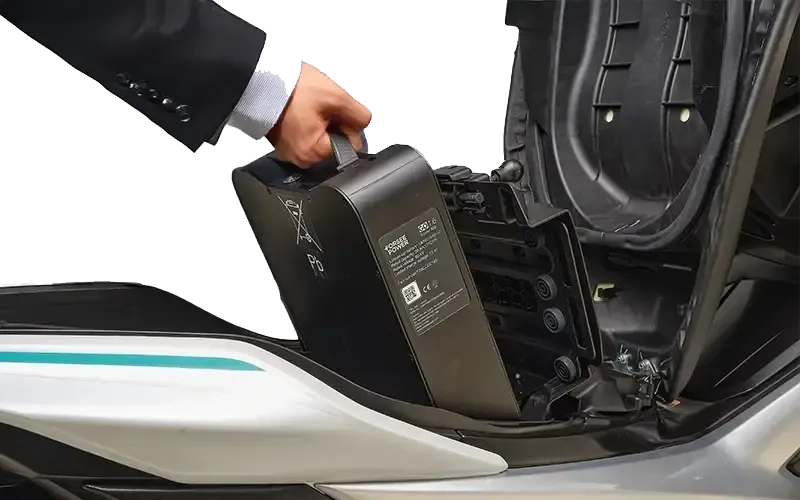
Mounted securely beneath the saddle under a protected, heavy-duty door, each individual battery pack features its own dedicated digital State of Charge (SOC) readout. This allows you to check power levels even when the batteries are removed from the vehicle. Under ideal conditions, this combined setup yields an Indian Driving Cycle (IDC) certified range of 117 km on a full charge.
Battery Charging Metrics
| Battery Configuration | Charging Duration |
| Single Battery Module (1.5 kWh) | Approximately 3 Hours 10 Minutes |
| Dual Battery Complete Set (3.0 kWh) | Around 6 Hours 20 Minutes |
While the scooter can technically operate on a single battery pack if you need to leave one at home to top up, Yamaha explicitly notes that overall peak performance and top-speed capabilities are throttled in this single-pack emergency mode.
4. Premium Electronics and Cycle Parts
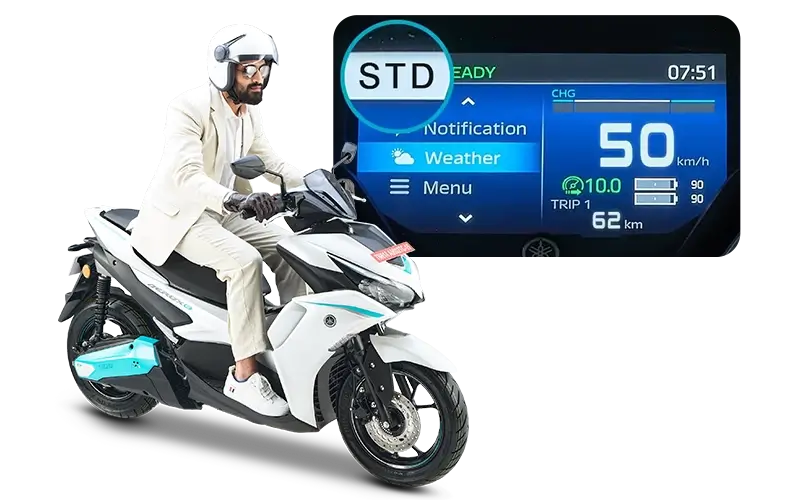
Yamaha didn’t just swap the engine; they completely overhauled the cockpit experience. Gone is the basic negative LCD screen of the old petrol model, replaced by a gorgeous 5-inch full-color TFT digital display.
Leveraging Yamaha’s Y-Connect mobile application, the instrument cluster integrates seamlessly with your smartphone via Bluetooth. This unlocks real-time turn-by-turn navigation, localized weather updates, phone battery indicators, and music/call/SMS notifications right in your line of sight.
On the safety front, the scooter comes heavily armed. It features a robust Traction Control System (TCS), which actively monitors wheel speed differentials to cut sudden power spikes if it senses a loss of grip on wet tarmac, oily surfaces, or loose gravel. Braking is managed by disc brakes at both ends, a solid upgrade from the petrol variant’s rear drum setup, and is further bolstered by single-channel ABS on the front wheel.
Yamaha Aerox-E Ultra: Complete Technical Specifications
Below is the definitive, comprehensive breakdown of every single performance metric, dimensional value, and cycle part that comprises Yamaha’s flagship electric two-wheeler.
| Technical Parameter | Official Specification Details |
| Motor Type | Permanent Magnet Synchronous Motor (PMSM) |
| Peak Power Output | 9.4 kW (~13 bhp) |
| Maximum Torque | 48 Nm |
| Final Drive System | High-durability Belt Drive |
| Battery Type | Lithium-ion (High-energy density cells) |
| Battery Capacity | 3.0 kWh total (Dual 1.5 kWh removable packs) |
| Certified Range | 117 km (IDC Certified) |
| Claimed Top Speed | 95.5 km/h |
| Front Suspension | Telescopic Forks |
| Rear Suspension | Twin Gas-charged Shock Absorbers |
| Front Braking Hardware | Hydraulic Disc with Single-Channel ABS |
| Rear Braking Hardware | Hydraulic Disc Brake |
| Front Tyre Profile | 110/80-14 (Tubeless, Sport-compound) |
| Rear Tyre Profile | 140/70-14 (Tubeless, Sport-compound) |
| Overall Length | 1980 mm |
| Overall Width | 700 mm |
| Kerb Weight | 139 kg (13 kg heavier than petrol variant) |
| Under-seat Storage | 15 Litres (Reduced from 24.5L due to battery placement) |
| Key Features | Keyless Go, Smart Key, Reverse Assist, Traction Control (TCS) |
5. Practicality vs. Performance: The Ultimate Trade-off
Let’s talk about the elephants in the room: weight, storage, and price. Because it carries two heavy lithium-ion blocks and a sophisticated thermal management casing, the electric model tips the scales at 139 kg. This makes it roughly 13 kg chunkier than the standard petrol Aerox.
To counter this added weight and preserve the sharp, corner-carving dynamics that riders love, Yamaha engineers had to specifically retune the internal valving of the telescopic front forks and the twin rear shock absorbers. The result is a slightly firm but immensely planted ride quality that thrives on smooth tarmac and twisty roads. Furthermore, to help you navigate this 139 kg machine in tight urban parking spaces, a dedicated Reverse Assist mode has been added to the switchgear.
The second compromise comes under the seat. Because the twin batteries occupy a massive chunk of real estate beneath the saddle, the boot capacity has shrunk from a generous 24.5 liters on the petrol version down to 15 liters. You can still fit a half-face helmet or your charging brick, but full-face helmet storage is out of the question. On the bright side, the central spine tunnel houses the main charging port alongside a small accessory cavity designed perfectly to shield your off-board charger and cables while on the move.
Market Positioning: Who Is This For?
At a starting point of ₹2.81 lakh (ex-showroom), this vehicle is currently Yamaha Motor India’s most expensive two-wheeler in production. It sits way above mass-market performance options like the Ather 450X, Ola S1 Pro, or Bajaj Chetak. Instead, it enters a highly exclusive, super-premium electric niche where its only real direct rival is the radical TVS X.
Because of this premium positioning, Yamaha is rolling out the vehicle using a highly measured, phased retail strategy. Initial availability is strictly limited to major metropolitan enthusiast hubs:
Delhi
Mumbai
Pune
Bengaluru
Chennai
Yamaha isn’t trying to win a sales volume war against localized EV giants. They are leveraging the incredible brand equity, motorcycle-like handling characteristics, and aggressive stance of the Aerox family to capture early adopters. These are buyers who aren’t looking to save money on their daily office commute; they are looking for a secondary or tertiary lifestyle garage addition that turns heads, handles flawlessly, and offers zero compromise on premium build quality.
Ultimately, its legacy will depend entirely on how willing Indian driving enthusiasts are to pay a heavy premium for high-end Japanese engineering and performance-tuned dynamics in this new electric era.
Disclaimer: Expected prices are based on industry estimates and are subject to change upon official announcement. Views expressed are informational; please consult your nearest Yamaha dealership for actual on-road pricing and availability.