
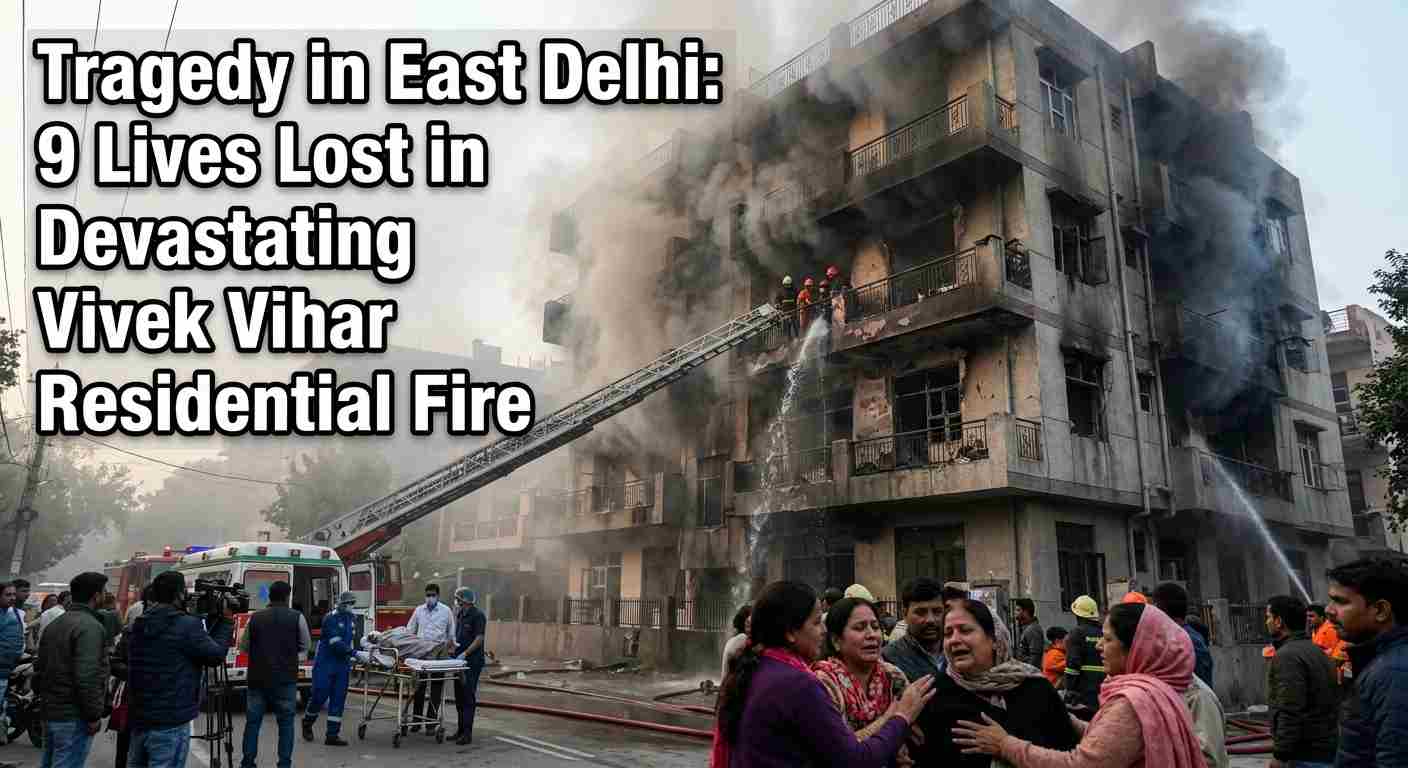
Vivek Vihar Fire Tragedy: A horrific fire broke out in a residential building in East Delhi’s Vivek Vihar early Sunday morning, claiming nine lives and leaving a community in mourning.
The silence of a Sunday dawn was shattered in East Delhi’s Vivek Vihar as a massive fire tore through a four-storey residential building, resulting in the tragic death of nine individuals, including a one-year-old child. The Vivek Vihar fire tragedy, suspected to have been triggered by an air conditioner (AC) unit explosion, has once again raised urgent questions regarding fire safety protocols in densely populated urban residential zones.
A Night of Horror: How the Fire Unfolded
The incident occurred in the early hours of May 3, 2026. According to Delhi Fire Service (DFS) officials, the initial distress call was received at approximately 4:00 AM. While the city slept, flames originated on the second floor of the building located in the prime locality of Vivek Vihar, Shahdara.
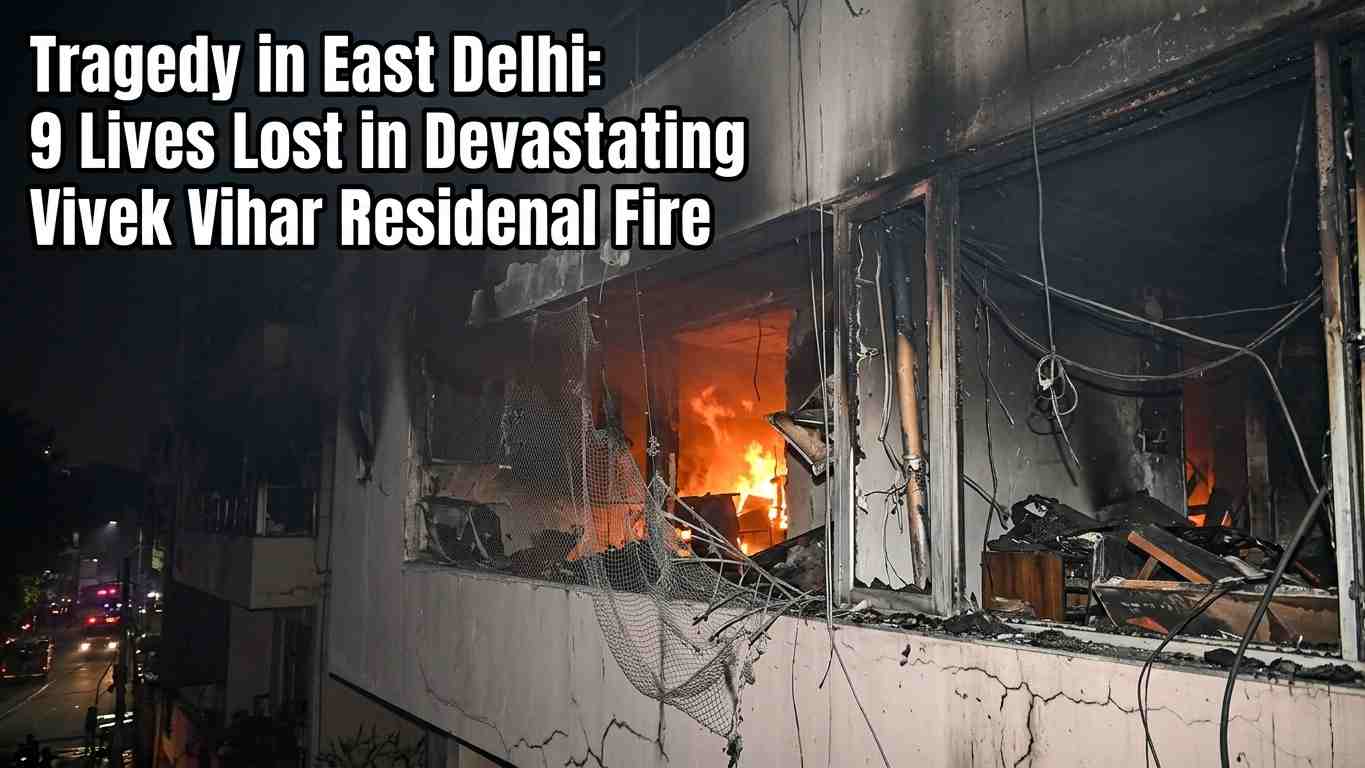
Within minutes, the blaze escalated, fed by household items and fueled by the narrow ventilation of the residential structure. By the time the first responders arrived, the fire had already climbed to the third and fourth floors, trapping families in their sleep.
The Rescue Operation The Delhi Fire Service deployed 14 fire tenders to the site. The narrow lanes and the intensity of the smoke posed significant challenges for the firemen. Despite these hurdles, fire personnel managed to rescue more than a dozen residents using manual ladders and breathing apparatus.
DCP Shahdara, Rajendra Prasad Meena, stated that while the fire was brought under control within two hours (by 6:00 AM), the cooling and search operations revealed a much grimmer reality inside the charred remains of the flats.
The Human Cost: Families Wiped Out
The most heartbreaking aspect of the Vivek Vihar fire tragedy is the loss of entire family units. The second floor, where the fire is believed to have been most intense, saw five casualties from a single family.
Victims Identified:
The authorities have established the identities of all nine victims:
The Second Floor Victims:
Arvind Jain (60)
Anita Jain (58)
Nishant Jain (35)
Anchal Jain (33)
Akash Jain (1.5 years old)
The Third Floor Victims:
Nitin Jain (50)
Shailey Jain (48)
Samyak Jain (25)
The First Floor Victim:
Sikha Jain (40)
Two others, including Sikha’s husband, Naveen Jain (48), were rushed to Guru Teg Bahadur (GTB) Hospital with burn injuries and smoke inhalation complications. The sight of the building—blackened with soot and smoke still billowing from the upper windows hours later—stood as a silent witness to the carnage.
The Suspected Cause: The Danger of AC Blasts
While an official investigation by the Delhi Police crime team and the forensic department is underway, preliminary reports and eyewitness accounts point toward a suspected AC blast.
A resident of the area, Rohit, informed news agencies that a loud bang was heard just before the flames became visible. “A blast in the AC triggered the fire,” he claimed.
Why do ACs explode? Technical experts suggest that during the transition into peak summer, older air conditioning units often face:
Voltage Fluctuations: Common in Delhi’s power grid during high-demand months.
Lack of Maintenance: Dust accumulation in the condenser coils leads to overheating.
Refrigerant Leaks: If the coolant gas leaks and comes into contact with a spark from a short circuit, it can cause a localized explosion capable of shattering windows and igniting curtains or furniture instantly.
Political Reaction and Government Support
Delhi Chief Minister Rekha Gupta expressed deep distress over the incident. In a post on X (formerly Twitter), she described the event as “extremely tragic” and assured that the state government is monitoring the situation closely.
“The loss of 9 lives in this accident has left me deeply distressed. The Delhi government stands firmly with the affected families. I have directed the local administration and DDMA to ensure every possible assistance to those injured and the kin of the deceased.” — Chief Minister Rekha Gupta
Local MLAs and municipal councilors have been stationed at the GTB Hospital to assist the families with the identification process and the handing over of bodies following the post-mortem examinations.
The Urban Fire Safety Crisis
The Vivek Vihar fire tragedy highlights a recurring nightmare for Delhi residents. Residential buildings in areas like Shahdara often lack:
External Fire Escapes: Most buildings have a single, narrow internal staircase which acts as a chimney for smoke during a fire.
Fire Alarms: Very few independent residential floors are equipped with smoke detectors.
Overloaded Wiring: As temperatures rise, the load on domestic wiring increases significantly due to multiple ACs, often exceeding the sanctioned load of the building.
Essential Fire Safety Tips for Homeowners
To prevent a repeat of the Vivek Vihar fire tragedy, experts recommend the following precautions:
Annual AC Service: Ensure your AC is serviced by a certified professional before the peak of summer.
Check Electrical Load: Avoid running all heavy appliances (ACs, Geysers, Microwaves) on a single circuit.
Install Smoke Alarms: A simple battery-operated smoke detector can provide the vital minutes needed to escape.
Keep Clear Exits: Ensure balconies and staircases are not blocked by discarded furniture or cardboard boxes.
Conclusion
As the families of Vivek Vihar prepare for the final rites of their loved ones, the city is left to grapple with the fragility of life in the face of technical failures. The investigation into the Vivek Vihar fire tragedy will likely conclude in the coming weeks, but for the survivors, the scars of this Sunday morning will last a lifetime.
The Delhi Police have registered a case, and a thorough probe into the building’s fire safety compliance is currently active.