
The sudden Apple price hike has completely reshuffled the premium tech market in India. For years, buying a MacBook or an iPad was viewed as a major, long-term investment—a purchase often planned over months of careful budgeting and saving. Whether it was a student eyeing an iPad Air for college or a creative professional upgrading to a high-end MacBook Pro, these machines represented the peak of aspirational consumer technology.
However, over the last few weeks, those technology dreams became significantly more expensive. In a sudden and drastic move, Apple sharply increased prices across several core product lineups in India, including MacBooks, iPads, the Mac Studio, Mac mini, HomePod, and Apple TV. In some extreme scenarios, base retail prices have jumped by tens of thousands of rupees, while premium, fully loaded configurations now cost nearly Rs 1,00,000 more than they did just a month ago.
This massive adjustment has sent shockwaves through the consumer electronics market. What makes the timing particularly striking is that it arrives precisely when the Cupertino giant is doubling down on on-device artificial intelligence via Apple Intelligence. While the company has avoided breaking down the exact internal math behind these revisions to end consumers, industry experts, supply chain analysts, and global financial data point to a singular, undeniable reality: the absolute chaos currently unfolding in the global semiconductor and memory supply chains.
Which Apple Products Are Sinking Under the Price Wave?
The steepest increases are concentrated heavily within Apple’s professional laptop lines, enterprise-focused desktop units, and premium tablets. Casual users looking at basic, entry-level models will notice that pricing has largely remained stable for the time being, but anyone hunting for professional-grade power will face severe sticker shock.
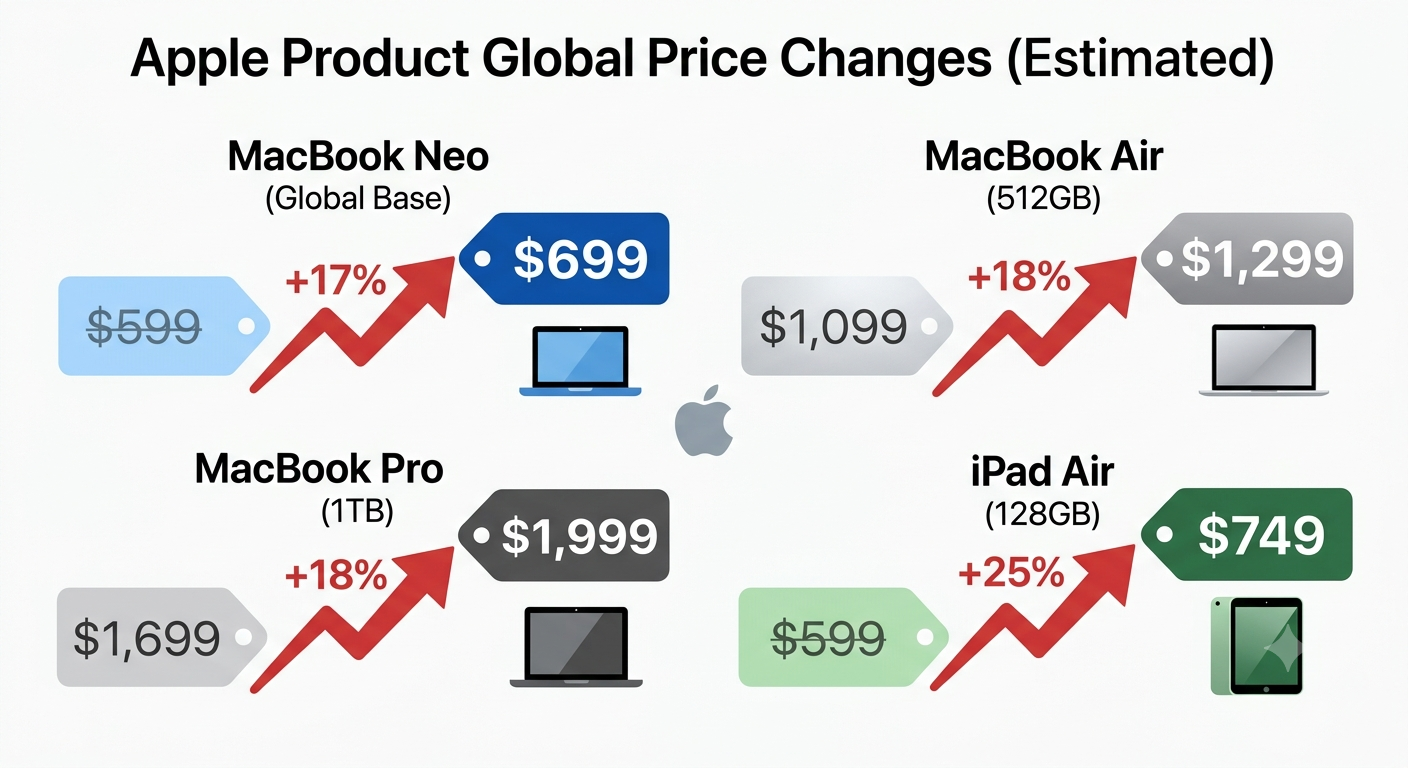
The absolute biggest shockwaves are reserved for high-end creative professionals and corporate tech buyers looking at top-tier, fully loaded configurations. Across multiple retail networks and media updates, fully customized, maxed-out MacBook Pro and Mac Studio configurations have seen their Indian market prices swell by up to Rs 1,00,000.
Even the highly praised MacBook Neo—initially introduced at an ultra-competitive $599 starting price to aggressively capture market share from entry-level Windows laptops and Chromebooks—has seen its base price pushed up to $699. This $100 baseline increase strips away a massive competitive advantage Apple held over key rivals like Dell’s newly minted XPS 13 or premium enterprise Chromebooks from Asus and Lenovo.
The AI Hardware Tax: Why On-Device Intelligence Costs a Premium
To understand why this Apple price hike is hitting wallets so hard right now, you have to look directly inside the modern silicon architecture powering the AI era. We are living through a massive, industry-wide race to build AI-first consumer devices. Unfortunately, running complex Large Language Models (LLMs) and advanced diffusion models locally on a laptop or tablet requires immense, uncompromising physical hardware power.
“Artificial intelligence gadgets demand greater RAM memory, storage, and chips, which allows them to run complex algorithms directly on the device.” — Siddharth Maurya, Managing Director, Vibhavangal Anukulkara Pvt Ltd
In older generational cycles, a base laptop could easily get by with 8GB of unified memory for standard web browsing, office suites, and light video editing. The cloud handled anything complex. However, on-device AI completely breaks this model. For an assistant to process complex local language prompts, generate high-resolution images instantly, or write code securely without transmitting your data to a remote cloud server, it requires a massive, permanently allocated pool of high-speed memory.
Because Apple designs its silicon with a unified memory architecture—where the CPU, GPU, and Neural Engine share a singular, ultra-fast memory pool—increasing the memory requirements drastically elevates the total manufacturing cost of the entire chip system. Furthermore, tech manufacturers are spending billions of dollars on cutting-edge software engineering, custom silicon fabrication layouts, and global supply chain diversification. These massive internal research and development investments are now steadily finding their way directly onto consumer price tags.
Welcome to “RAMageddon”: The Global Memory Supply Crunch
While internal R&D explains Apple’s strategic pricing shift, the immediate catalyst for this massive global price jump is a brutal, structural shortage in the memory chip market. Industry experts have officially dubbed this supply chain crisis “RAMageddon.”
Prices of Dynamic Random Access Memory (DRAM), an essential component found in virtually every premium tech product on earth, surged by a staggering 98% in the first quarter of 2026 alone. Rather than cooling down, data from industry tracker TrendForce indicates that memory prices are on track to climb by an additional 58% to 63% through the current quarter.
  DRAM Price Surge (H1 2026)
  ==========================
  Q1 2026:  [██████████████████████████████] +98%
  Q2 2026:  [███████████████████] +58% - 63% (Projected)
This historic component price spike is a direct result of the AI server boom. Massive hyperscale data centers and trillion-dollar AI infrastructure firms are buying up every piece of high-bandwidth memory they can secure to power next-generation server clusters. Memory manufacturing giants like Micron are actively prioritizing massive, high-margin orders from AI chip leaders like Nvidia. Micron recently confirmed it has locked in a stunning $22 billion in long-term commitments from enterprise customers desperate to guarantee their own memory pipelines.
This leaves traditional consumer electronics manufacturers scrambling for whatever high-speed memory supply remains. When component costs spike this dramatically, even a global titan with unmatched supply chain leverage like Apple can no longer absorb the blow without fracturing its corporate margins.
During an internal conference call with financial analysts, Apple CEO Tim Cook openly flagged this looming headwind, noting that while existing product inventory had cushioned their gross margins early in the year, rising memory costs would inevitably catch up to the business. The financial reality has finally arrived, driving immediate downward pressure on profitability and forcing retail price course-corrections.
Unmatched Brand Equity and Ecosystem Lock-In
Outside of pure manufacturing data and component sheets, there is a distinct marketing and economic reality to consider: Apple possesses unparalleled pricing power.
Rajveer Singh of Thinkarklub points out that Apple’s current pricing strategy goes far deeper than tracking physical bill-of-materials costs. When a company establishes an ecosystem with deep consumer loyalty, consumer demand becomes highly inelastic.
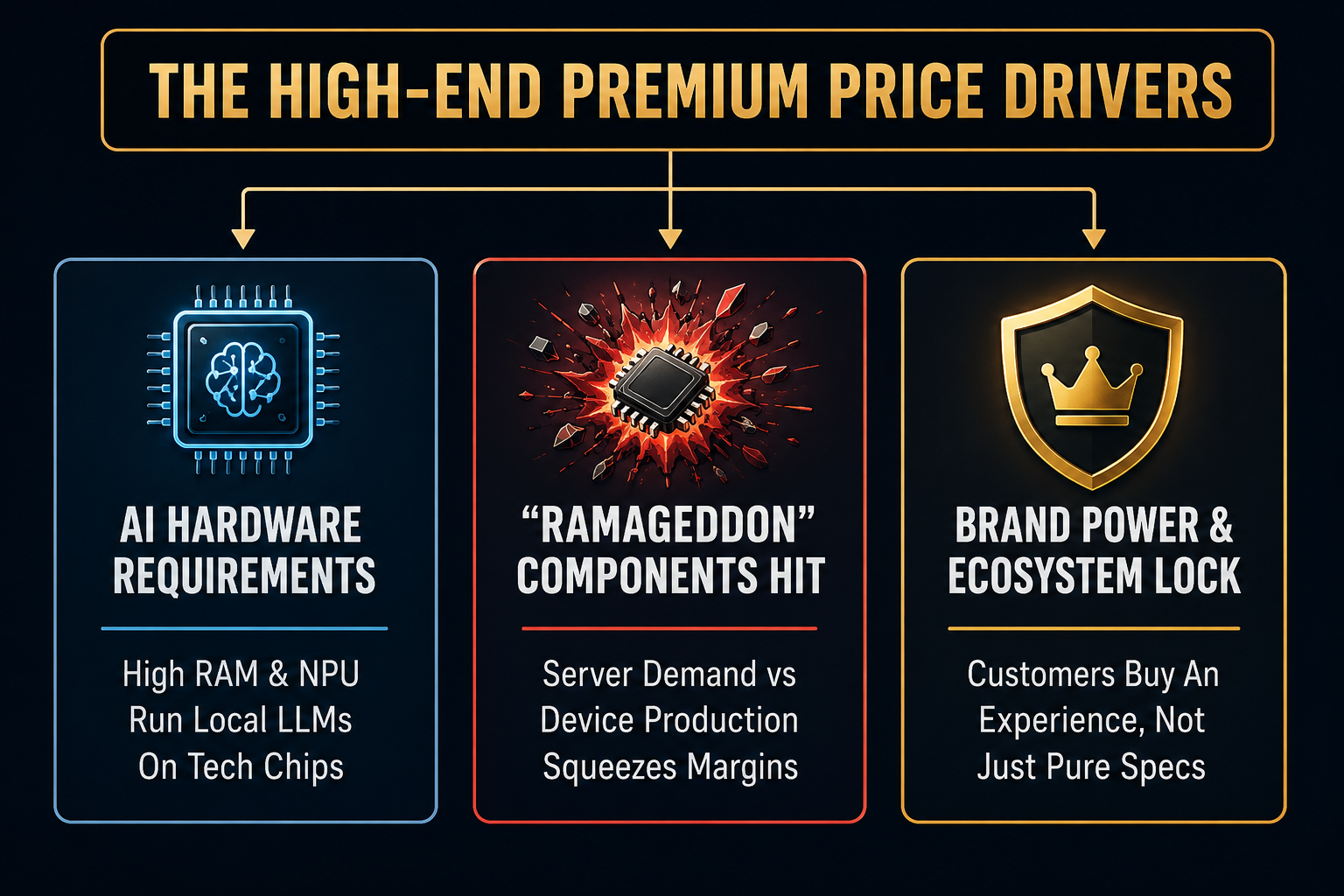
When professionals purchase a MacBook Pro, they aren’t simply cross-shopping a list of raw hardware specifications against a cheaper Windows alternative. They are paying for Apple Silicon’s unique power efficiency, proprietary software tools, and seamless integration with the rest of their personal and professional hardware ecosystem. Because consumers value this experience so highly, Apple can confidently adjust its pricing models upward to account for macroeconomic shifts without fearing a mass exodus of its core user base.
What This Disruptive Shift Means for Indian Tech Buyers
For Indian consumers actively looking to purchase a new Mac or iPad, the takeaway from this sudden market shift is clear: holding out for a major discount cycle later in the year might not pay off. The underlying forces driving these price increases—global memory deficits, server room competition, and the hardware demands of local AI processing—are structural, long-term industry changes rather than temporary retail blips.
Market research firms like IDC are already forecasting that these steep price hikes will cool overall hardware volumes, projecting a significant decline in global smartphone and PC shipments as mainstream buyers pull back. However, for those who absolutely require high-end computational power, this Apple price hike serves as an early wake-up call. The era of cheap, low-memory base configurations is officially over, and the AI future comes with a clear, upfront premium.
Looking Ahead: Is the iPhone Next in Line?
With MacBooks, iPads, and audio equipment already experiencing major upward price adjustments, the elephant in the room remains Apple’s primary revenue driver: the iPhone.
While the current price revisions have strategically left the current iPhone lineup untouched, leading global market analysts warn that this immunity is highly temporary. Industry researchers point out that announcing these dramatic hardware adjustments during the summer months is an incredibly deliberate, tactical move. By separating the memory cost correction from the highly anticipated autumn hardware refreshes, Apple ensures that the conversation surrounding its next flagship phone launch focuses entirely on feature innovation and user value, rather than being overshadowed by unexpected price shock headlines.
Ultimately, this sudden shift across the tech sector demonstrates that AI is no longer just a futuristic software gimmick or a cool cloud feature. It is a permanent, physical cost driver that is actively rewriting the economic rules of the consumer electronics industry from the ground up.