
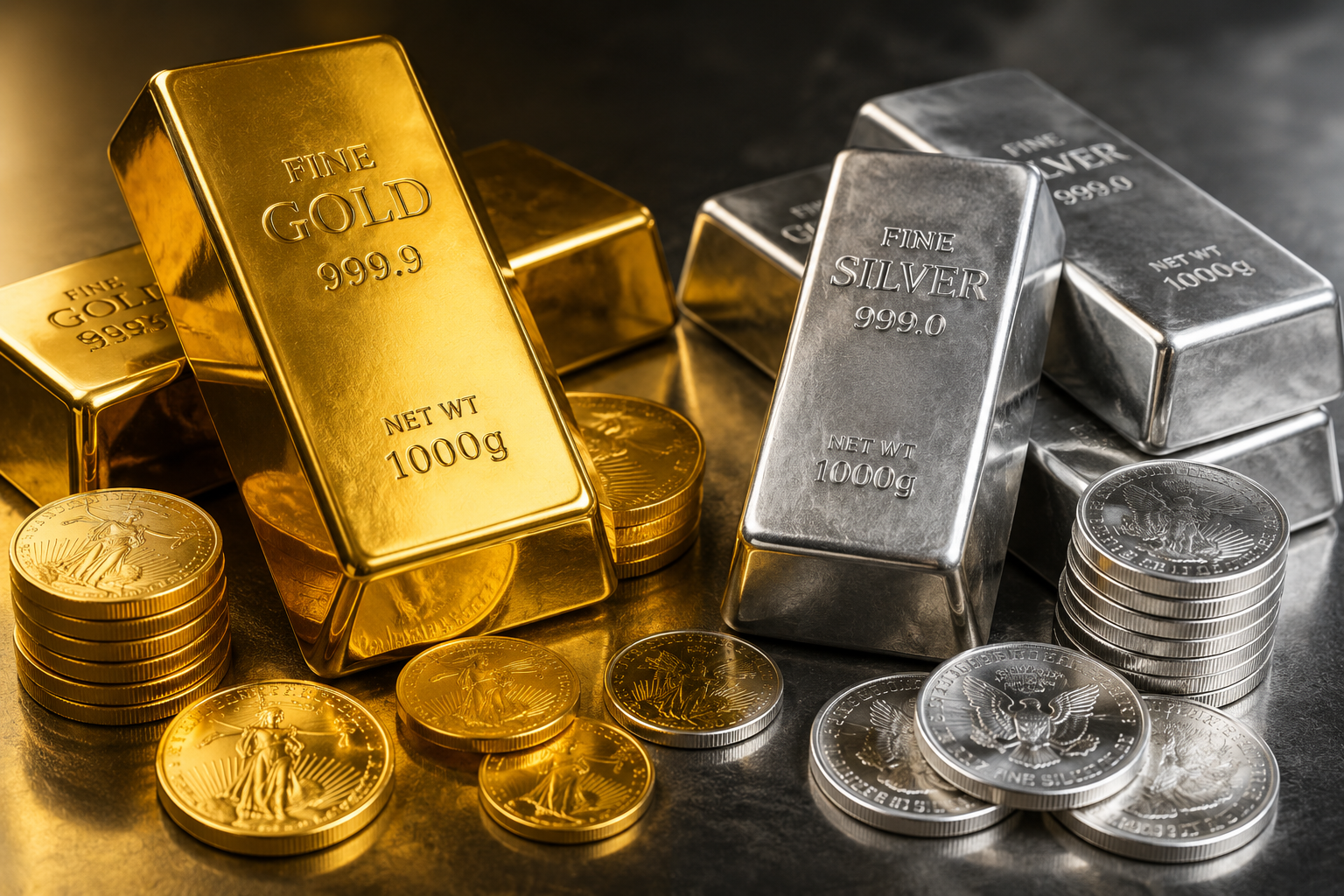
Gold and Silver Price Today : If you have been waiting to buy gold or silver for upcoming weddings and festivals, today brings some good news. Precious metals dropped in price across major Indian cities and regional markets today. This sudden drop happened because global market trends changed, big institutional investors started selling to lock in their profits on the Multi Commodity Exchange (MCX), and currency rates shifted.
For regular retail buyers looking to pick up jewelry or investors wanting to balance their portfolios, this price dip is a great time to buy. Gold and silver have been sitting at record high levels for the past few months, so today’s drop gives everyone a solid chance to buy physical assets at a much better rate.
Today’s Gold and Silver Price Across India (Per Gram)
Gold Prices (24K, 22K, 18K)
Kolkata & Mumbai: 24K at ₹14,279 | 22K at ₹13,089 | 18K at ₹10,709
Delhi-NCR & Jaipur: 24K at ₹14,294 | 22K at ₹13,104 | 18K at ₹10,724
Chennai Market: 24K at ₹14,349 | 22K at ₹13,154 | 18K at ₹10,799
Bengaluru & Hyderabad: 24K at ₹14,279 | 22K at ₹13,089 | 18K at ₹10,709
Ahmedabad (Gujarat): 24K at ₹14,284 | 22K at ₹13,094 | 18K at ₹10,714
Silver Prices (Per Gram & Kilogram)
Mumbai, Kolkata & Ahmedabad: ₹234.90 per gram (₹2,34,900 per kg)
Delhi-NCR & Jaipur: ₹235.00 per gram (₹2,35,000 per kg)
Chennai, Hyderabad & Kerala: ₹239.90 per gram (₹2,39,900 per kg)
Bengaluru Tech Belt: ₹234.85 per gram (₹2,34,850 per kg)
The Big Reset in East and West India: Kolkata and Mumbai Retail Markets
Kolkata is the absolute heart of the jewelry trade in the eastern region. The city has a massive network of traditional artisanal workshops in the famous Bowbazar area and central trading districts. Because of this high concentration of manufacturing, local spot prices in Kolkata react instantly to any market change. Today, the local market saw a uniform price cut across all three main gold purity categories.
The purest form available, 24 Karat Gold (99.9% Purity), dropped down to ₹14,279 per gram. This is a direct drop of ₹1 per gram from the highest level of the previous trading session. If you are looking at bulk investment blocks, 10 grams of pure 24K bullion will now cost you ₹1,42,790. On the other hand, the bigger 100-gram corporate storage bars are now retailing at ₹14,27,900.
For regular consumers buying wedding jewelry, 22 Karat Hallmark Gold (91.6% Purity) fell by the same margin, settling at ₹13,089 per gram. This brings the cost of a standard 10-gram gold chain or bangle baseline to ₹1,30,890. Meanwhile, the lower 18 Karat Gold (75.0% Purity), which young buyers prefer for modern lightweight diamond settings and everyday lifestyle jewelry, dropped to ₹10,709 per gram, making it ₹1,07,090 for 10 grams.
Physical silver in Kolkata also followed this downward trend line. However, it managed to find a strong floor at ₹234.90 per gram. In the wholesale market, bulk industrial silver bars wrapped up the day’s trade at ₹2,34,900 per kilogram.
Moving over to the western side, Mumbai acts as India’s financial hub and manages the largest corporate delivery pipelines. Because of this, Mumbai’s daily trading patterns set the price baseline for most of southern and western India. Today, the city copied Kolkata’s retail numbers exactly. Pure 24K investment gold is trading at ₹14,279 per gram, standard 22K consumer gold stands at ₹13,089 per gram, and 18K designer pieces are moving at ₹10,709 per gram. Bulk silver bars also matched the national average perfectly, closing at ₹2,34,900 per kilogram due to stable liquidity across the city’s counter markets.
Northern Luxury Vs Southern Demand: Delhi-NCR and Chennai Variations
The northern real estate and luxury retail markets handle massive cash volumes during seasonal periods. Because Delhi-NCR is landlocked and relies heavily on complex transport routes and strict local association rules, it usually carries a minor regional premium over coastal trading hubs.
Today, pure 24K investment gold in Delhi is trading slightly higher at ₹14,294 per gram, or ₹1,42,940 for 10 grams. Traditional 22K bridal gold reflects this regional gap, holding at ₹13,104 per gram, while 18K gold used for modern stone-setting work sits at ₹10,724 per gram. High industrial demand from nearby manufacturing plants in Haryana and Uttar Pradesh kept bulk silver steady at ₹2,35,000 per kilogram.
Down in Tamil Nadu, the Chennai market tells a completely different story. South India consumes a massive chunk of India’s total physical gold imports, and this constant high demand gives Chennai its own unique price trajectory. Today, Chennai topped the metropolitan price charts across the country.
Pure 24K gold in Chennai is retailing at ₹14,349 per gram, which means a 10-gram purchase will cost ₹1,43,490. Traditional 22K retail options carry a notable local markup, trading at ₹13,154 per gram, while premium 18K luxury jewelry alloys are priced at ₹10,799 per gram. Chennai’s retail silver index also jumped ahead of other regions, trading at ₹239.90 per gram or ₹2,39,900 per kilogram, showing a clear premium over the Mumbai and Kolkata zones.
Tech Hubs and Heavy Buyers: Bengaluru, Hyderabad, and Kerala
In Karnataka’s tech capital, Bengaluru, the market balances two different kinds of buyers—young IT professionals looking at corporate digital gold investments and traditional families buying physical bullion. Today, Bengaluru’s supply lines kept things very stable, copying Mumbai’s gold rates exactly. Pure 24K investment gold stands at ₹14,279 per gram, standard 22K ornaments are at ₹13,089 per gram, and lightweight 18K contemporary designs are trading at ₹10,709 per gram. Wholesale silver bars remained steady at ₹2,34,850 per kilogram.
Next door in the Telugu states of Telangana and Andhra Pradesh, the Hyderabad market enjoys deep cultural ties to physical gold accumulation. Daily trading volumes here stay consistently high throughout the year. Today, pure 24K investment biscuits and stamped mint bars are retailing at ₹14,279 per gram. Everyday 22K bridal jewelry components are holding flat at ₹13,089 per gram, and 18K gold stands at ₹10,709 per gram. However, because Hyderabad shares southern distribution lines with Chennai, its silver price took a jump, closing at a premium rate of ₹2,39,900 per kilogram.
Kerala showcases a very unique market model. The state sees massive, high-volume wedding purchases alongside a massive secondary market where people constantly recycle old scrap gold. Thanks to its excellent maritime port logistics, baseline costs in Kerala stayed tightly anchored to the core national rate. Pure 24K gold is selling at ₹14,279 per gram, traditional heavy 22K bridal sets are at ₹13,089 per gram, and modern 18K style items are trading at ₹10,710 per gram. Silver followed the wider southern trend, changing hands at ₹2,39,900 per kilogram.
Refining Centers and Artisan Clusters: Gujarat and Rajasthan
Gujarat plays a massive role in how physical bullion moves across India due to its vast transport infrastructure and big corporate gold refining hubs. Today, pure 24K gold in Ahmedabad carries a very tight regional markup, holding at ₹14,284 per gram. Standard 22K jewelry options are trading at ₹13,094 per gram, and the fashion base for 18K items stands at ₹10,714 per gram. Because it sits right next to major distribution centers, retail silver stayed flat at ₹2,34,900 per kilogram.
In Rajasthan, the Jaipur artisan cluster operates as a global center for colored gemstones and legendary jewelry arts like Kundan and Meenakari. The city handles immense manufacturing volumes daily. Today, northern transport logistics fixed the local 24K gold rate at ₹14,294 per gram. Custom workshop managers are tracking 22K gold at ₹13,104 per gram, while standard diamond setting bases in 18K are priced at ₹10,724 per gram. Local artisan workshops are getting smooth silver deliveries at a steady rate of ₹2,35,000 per kilogram.
Global Market Forces: Why Did Precious Metals Crash Today?
If you want to understand where gold and silver rates are going next, you have to look at the global economic engines pulling the strings behind the scenes.
The main reason for today’s price drop is global safe-haven outflows. Recently, international trade routes have started stabilizing, and global political tensions have cooled down slightly. This has caused big institutional funds to take their money out of safe defensive assets like physical gold and throw it back into high-yielding stock market assets and paper bonds. When the big international funds stop panicking, they sell off gold, causing prices to fall instantly.
The second factor is the historic link between silver and gold. Over long cycles, silver rates almost always copy the movement of gold. Today’s downward drop in the gold sector dragged silver along with it, forcing the white metal to defend its base floor at ₹234.90 per gram while blocking any intraday gains.
Currency changes are also playing a very major role inside India. A stronger Indian Rupee has reduced the net cost of importing raw bullion bars through international borders. Since India imports almost all of its precious metals using US dollars, a stronger rupee means Indian companies pay less to import the same amount of gold. This direct financial benefit is passed straight down to local retail showroom buyers. Finally, local jewelry houses are using this price crash to stock up their vaults before the heavy wedding season arrives later this year.
Smart Buyer Guide: How to Check Your Showroom Bill
With 24K gold sitting at ₹14,279 per gram, even a tiny mistake or a hidden charge on your retail bill can cost you thousands of rupees. To protect your hard-earned money, you must understand exactly how a jewelry showroom calculates your final bill.
Every single legal jewelry store invoice follows a standard legal breakdown. The equation adds the pure cost of the metal to the labor charges, government duties, and safety checks:
First, never buy any piece of gold jewelry without checking the six-digit alphanumeric HUID code. This Hallmark Unique Identification code must be clearly laser-stamped onto the inner side of the ornament. You can easily download the central government’s official BIS Care App on your phone while standing inside the showroom. Type the code into the app to instantly verify the item’s exact purity, its registered weight, and the details of the certified factory that made it.
Second, check the purity baseline. Make sure the store’s making charges are calculated based on the specific karat tier you are buying, not the top-tier 24K rate. For example, if you are buying a 22K gold necklace, the making charge percentage should apply to today’s 22K base price of ₹13,089 per gram.
Lastly, run your own numbers. Open an independent digital gold rate calculator on your phone before handing over your credit card. This simple cross-check ensures the showroom bill is fully transparent and does not contain any hidden operational markups or extra fees.
Investing Wisely During a Market Dip
This sharp correction offers a great chance to balance your long-term wealth, depending on your individual target goals.
If you are a retail jewelry buyer, do not try to time the absolute bottom of the market. Bullion prices are highly volatile, and guessing the lowest day is nearly impossible. A much better approach is a staggered buying plan—break your total purchase weight into smaller parts and buy them over three to four weeks. This averages out your final costs beautifully.
For long-term investors, keeping 10% to 15% of your wealth in precious metals is a proven way to hedge against inflation and economic shifts. If you do not want to deal with the security risks, lockers, and heavy making charges of physical ornaments, look at digital alternatives. Gold ETFs, sovereign gold bonds, and digital gold apps let you track live market prices cleanly without any physical hassle.
If you are a physical silver collector, today’s stable base of ₹234.90 per gram is an excellent entry window to accumulate volume. With steady 5% to 7% year-to-date gains already in the bag, buying on clear dips like this lets you build a strong low-cost foundation before global industrial demand picks up pace again.
Market Outlook: What the Charts Say Next
Top commodity research analysts have pointed out a few key levels on the charts following today’s busy trading session.
Gold in the core Kolkata market has built a strong short-term support base around the ₹14,200 per gram line. As big institutional buyers step in to stop the slide at this level, experts believe gold will consolidate its position here before trying to test its next major resistance boundary near ₹14,390.
For silver, the long horizontal consolidation at ₹2,34,900 per kilogram shows that the recent wave of short-term speculative selling is mostly over. Backed by growing industrial use in electronics and solar panels, along with its solid 5% to 7% year-to-date growth, the white metal is well-prepared to protect this current floor before aiming for its next big target at ₹2,38,500.
Please Note: We collect these market rates from different news updates and local market sources for general information only. Do not take this as official financial or investment advice. Since gold and silver prices change second-by-second based on market ups and downs and local showroom taxes, you should always check the live price counter at your store and talk to an expert before spending your money.