
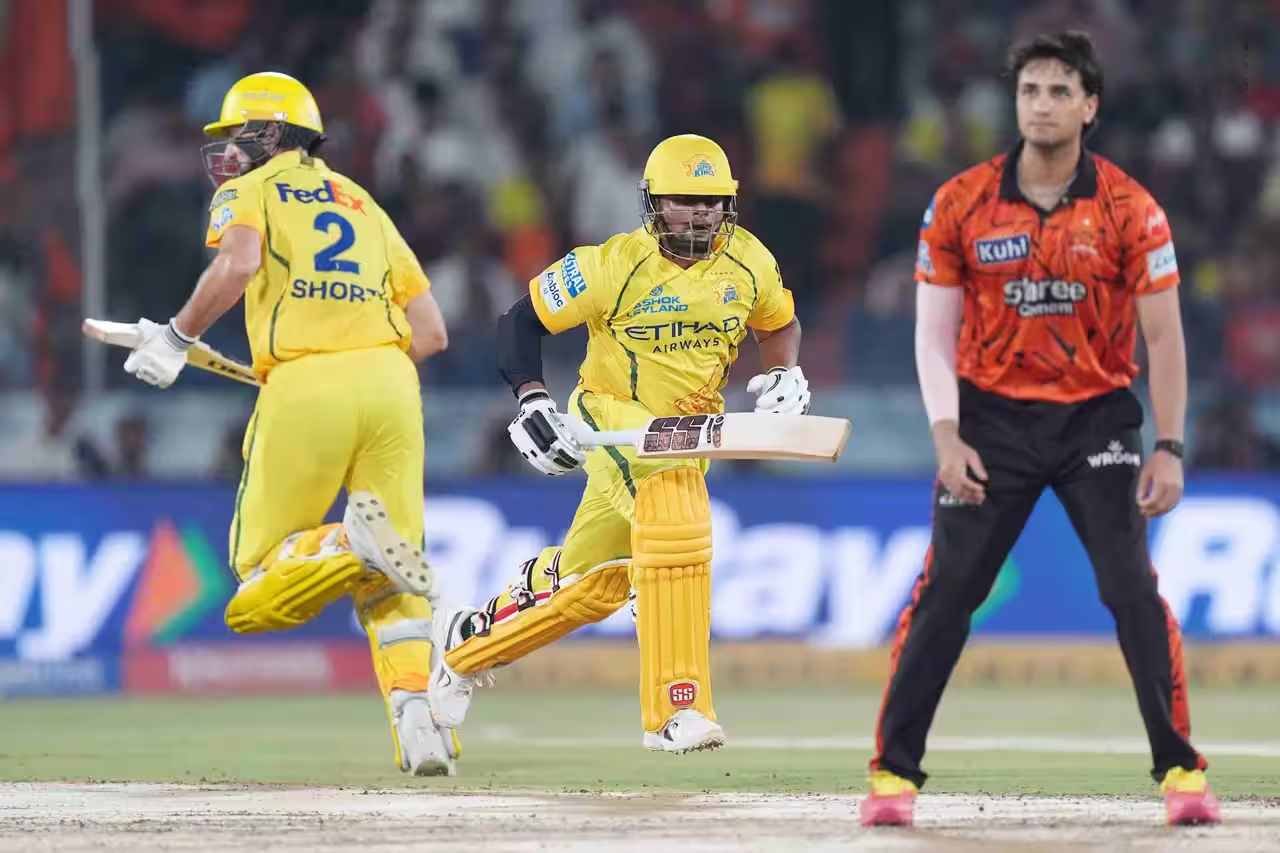
SRH vs CSK TATA IPL 2026 : The high-octane drama of TATA IPL 2026 reached a crescendo tonight at the Uppal Stadium as the Sunrisers Hyderabad (SRH) successfully defended a challenging total against the Chennai Super Kings (CSK). In the 27th match of the season, SRH showcased why they are considered one of the most explosive batting units in the tournament, while their bowling department displayed nerves of steel to stifle a spirited Chennai chase.
The victory was anchored by a breathtaking half-century from Abhishek Sharma, who set the tone in the Powerplay, and a masterclass in death bowling by Eshan Malinga, whose three wickets proved to be the decisive factor in the 10-run victory. Despite a valiant fightback by Ayush Mhatre and Matthew Short, CSK fell agonizingly short, leaving the yellow army to reflect on a missed opportunity at a crucial juncture of the season.
SRH vs CSK TATA IPL 2026 Match Overview: A Tale of Two Explosive Starts
Final Score:
SRH: 194/9 (20 Overs)
CSK: 184/8 (20 Overs)
Result: Sunrisers Hyderabad won by 10 runs.
Man of the Match: Abhishek Sharma (59 off 22).
Winning the toss and electing to field, CSK captain Ruturaj Gaikwad hoped to exploit the early evening conditions. However, Abhishek Sharma had other plans. Abhishek launched a brutal assault, scoring 59 off just 22 balls at a jaw-dropping strike rate of 268.18. While the SRH middle order faced a temporary stutter due to Anshul Kamboj’s discipline, the clinical power of Heinrich Klaasen (59 off 39) ensured SRH posted a formidable 194/9.
Chennai’s chase began with a significant setback as Sanju Samson fell early to Nitish Kumar Reddy. However, young Ayush Mhatre kept the flame alive with a blistering 30 off 13 balls. The game looked to be slipping away from Hyderabad as Matthew Short and Sarfaraz Khan built a steady partnership. But the re-introduction of Eshan Malinga changed the complexion of the match. Malinga’s pinpoint yorkers and deceptive slower balls accounted for three key wickets, including those of Gaikwad and Sarfaraz. Despite a late flurry of runs from the tail, CSK finished at 184/8, handed a 10-run defeat by the clinical Hyderabad unit.
Detailed Player-to-Player Performance (Scorecard Toolbar)
1st Innings: Sunrisers Hyderabad (194/9 in 20 Overs)
Batting Performance
Bowling Performance (CSK)
2nd Innings: Chennai Super Kings (184/8 in 20 Overs)
Batting Performance
Bowling Performance (SRH)
Match Deep-Dive: The Turning Points
1. The Abhishek Sharma “Tornado”
The match began with a statement of intent that left the CSK bowlers shell-shocked. Abhishek Sharma didn’t wait to settle in; he treated every ball with disdain. His strike rate of 268.18 is one of the highest of the season, and his ability to clear the boundary with such frequency forced CSK to burn through their primary bowling options early. By the time Jamie Overton finally got him, SRH had a base that allowed them to survive a mid-inning lull.
2. The Kamboj-Overton Counter-Attack
CSK stayed in the game primarily due to the intelligence of Anshul Kamboj and Jamie Overton. Kamboj was the most economical bowler on display, varying his pace beautifully to finish with 3/22. Overton, though more expensive, picked up critical wickets of Abhishek and Nitish Reddy at moments when SRH threatened to cross the 210-mark. Their combined six wickets ensured that the target, while stiff, remained within the realm of possibility for the CSK batters.
3. Eshan Malinga’s “Triple Treat”
Chasing 195 requires a set batter to stay until the 18th over. CSK seemed to have that in Matthew Short and Sarfaraz Khan. However, Eshan Malinga lived up to his legendary namesake’s reputation. His three-wicket burst (3/29) was the spine-breaker for Chennai. His dismissal of a well-set Sarfaraz Khan just as he began to accelerate was arguably the moment SRH won the match. Malinga’s accuracy under pressure is fast becoming SRH’s most reliable asset.
4. Ayush Mhatre’s Fearless Cameo
Young Ayush Mhatre continues to be a silver lining for CSK. Coming in at a high-pressure situation, he struck five boundaries in a 13-ball stay, showing no fear against the SRH pace attack. His strike rate of 230.77 provided the momentum CSK needed after the early loss of Sanju Samson. Had he stayed for another three overs, the result might have been different.
Strategic Analysis & Tactical Takeaways
SRH’s Batting Depth vs. Inconsistency
Despite ducks from Ishan Kishan and low scores from the middle order, SRH reached nearly 200. This speaks to the sheer destructive power of their top order and Heinrich Klaasen’s ability to anchor an explosive innings. However, the drop-off in the middle order—with Liam Livingstone and Aniket Verma failing to contribute—will be a concern for the management.
The “Extras” Problem
SRH gave away 18 extras, including 15 wides. In a 10-run game, this is a massive red flag. Discipline in the bowling line, particularly from Sakib Hussain (9 wides), will be a point of discussion. Conversely, CSK’s bowling was more disciplined but lacked the “wicket-taking” edge during the death overs.
Captaincy and Rotation
Ruturaj Gaikwad’s decision to give Matthew Short three overs (going at nearly 13 per over) arguably cost CSK those extra 10-15 runs that proved to be the margin of defeat. On the other side, Ishan Kishan’s rotation of Malinga and Nitish Reddy was tactically superior, ensuring his best bowlers were available for the high-pressure 17th-20th overs.
Conclusion: Hyderabad Holds the Fort
This 10-run victory is a testament to the “never-say-die” attitude of the Sunrisers Hyderabad. They won the match in the first six overs with the bat and the last four overs with the ball. For the Chennai Super Kings, it’s a tough pill to swallow—they were in the hunt for 38 overs of the game, only to see it slip away in the final moments.
The IPL action continues to heat up! Tomorrow, the Lucknow Super Giants take on the Rajasthan Royals in what promises to be a clash of the titans. Can Sanju Samson lead the Royals back to winning ways? Don’t miss it!