
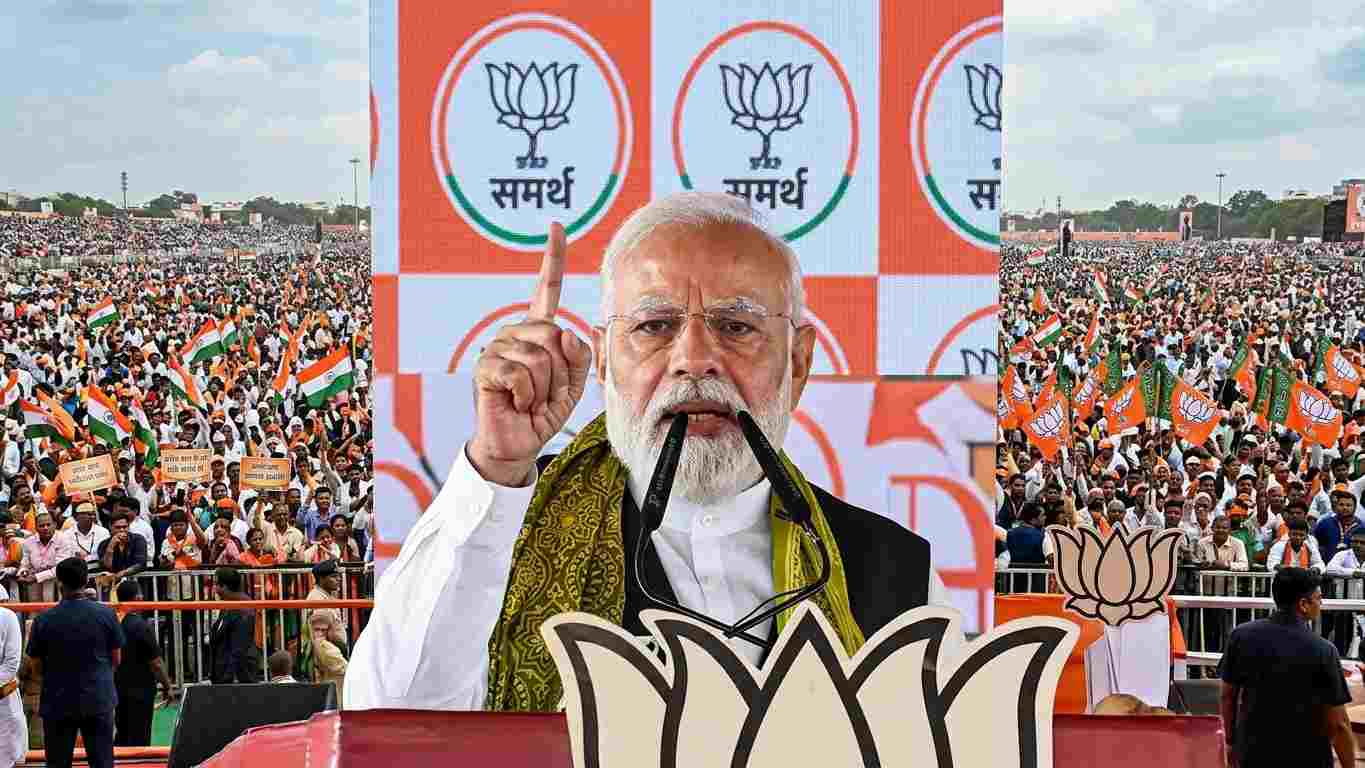
PURBA MEDINIPUR –PM Modi’s ‘Six Big Guarantees: In a high-octane rally that has effectively set the tone for the upcoming 2026 West Bengal Assembly Elections, Prime Minister Narendra Modi on Thursday unveiled a roadmap for what he calls “Sonar Bangla” (Golden Bengal). Addressing a massive gathering in Purba Medinipur, the Prime Minister launched a blistering attack on the Mamata Banerjee-led Trinamool Congress (TMC) government, accusing it of systemic corruption and administrative failure.
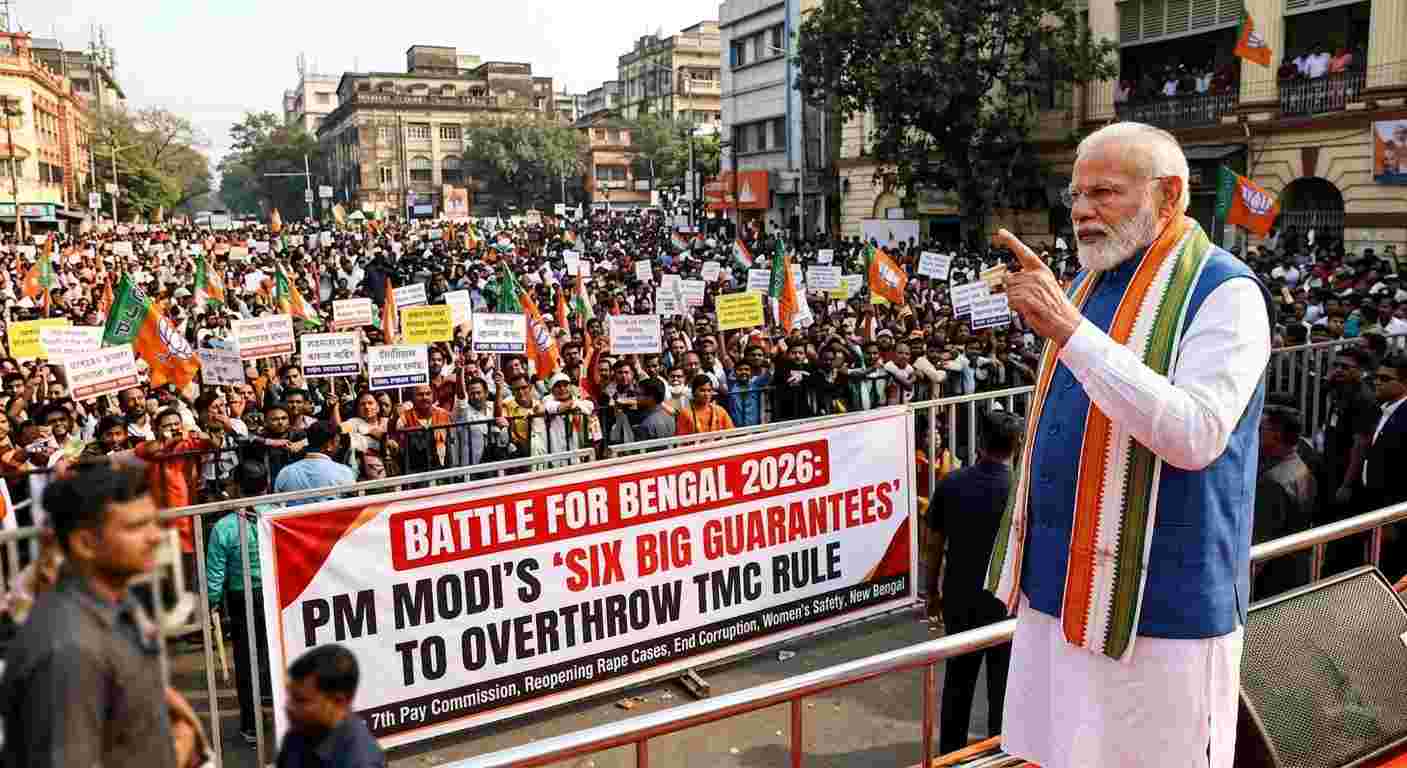
The highlight of the afternoon was the announcement of six transformative promises that the PM claimed would be the cornerstone of a BJP-led administration. From a long-awaited salary hike for state employees to a stern vow to reopen every single rape case in the state, the Prime Minister’s “guarantees” targeted the heart of Bengal’s current socio-political unrest.
1. The Implementation of the 7th Pay Commission
Perhaps the most significant economic promise for the state’s middle class was the Prime Minister’s commitment to the 7th Pay Commission. For years, West Bengal state government employees have protested the widening gap between their Dearness Allowance (DA) and that of Central government employees.
“The moment a BJP government is formed in West Bengal, the 7th Pay Commission will be implemented. Our karmayogis (government employees) deserve the dignity and financial security that their counterparts across India enjoy,” PM Modi declared.
BJP leaders later clarified that this implementation is intended to happen within the first 45 days of assuming power, aiming to resolve a decades-old grievance of the state’s administrative backbone.
2.Reopening Every Rape Case: A Vow for Women’s Safety
In a direct response to recent incidents that have sparked nationwide outrage, the Prime Minister made a solemn pledge regarding women’s safety. He promised a “zero-tolerance” policy toward crimes against women.
The Prime Minister stated that a BJP government would ensure that “every file regarding every injustice committed against our daughters, and every case of rape, will be reopened.” This move is seen as a strategic attempt to tap into the growing public sentiment regarding the perceived lack of police accountability and the “culture of silence” allegedly fostered by the ruling party.
3. Ending the ‘Atmosphere of Fear’ with the Rule of Law
Central to the BJP’s campaign is the narrative of “lawlessness” in Bengal. The Prime Minister promised to replace the current “atmosphere of fear” with a foundation of trust and constitutional validity.
Restoration of Faith: Vowed to bring back the rule of law where the police serve the public, not political masters.
Accountability: Promised that the administrative machinery would be “fully answerable” to the citizens.
4. War on Corruption: ‘No One is Above the Law’
Taking a dig at the various scams that have plagued the state—including the teacher recruitment scam and the ration scam—the PM sent a stern warning to TMC leaders.
“Whoever has engaged in corruption under TMC rule belongs in jail,” he said. “Be it a minister or a watchman, the law will hold everyone to account. No TMC goon will be able to evade the law any longer.” This promise signals a massive legal crackdown on “syndicate culture” if the power shift occurs.
5. Citizenship and Border Security
National security and identity remained key themes. The Prime Minister reiterated the party’s stance on the Citizenship Amendment Act (CAA) and the issue of illegal immigration.
Refugee Rights: Refugees who have sought shelter in India will be granted full Constitutional rights.
Zero Infiltration: The PM vowed that “infiltrators” would be identified and driven out, stating they would not be permitted to remain in India under a BJP administration.
6. The ‘Double-Engine’ Vision for Prosperity
The Prime Minister emphasized the necessity of a “double-engine government”—where the same party governs at both the Centre and the State. He argued that the current friction between the Prime Minister and the Chief Minister only hurts the common man.
Fisheries & Seafood: Specifically targeting the coastal belt of Medinipur, the PM noted that while India’s seafood production has doubled, Bengal has lagged behind. He promised to make the state self-reliant in fisheries.
Industrial Strength: He spoke of restoring the old industrial glory of regions like Haldia and Asansol, which he claimed had been “crushed into the dust” by decades of mismanagement.
Key Election Information
As the “Mother of all Battles” begins, here is the official schedule for the 2026 elections:
| Event | Date |
| Phase 1 Voting (152 Seats) | April 23, 2026 |
| Phase 2 Voting (142 Seats) | April 29, 2026 |
| Counting & Results | May 4, 2026 |
The Political Stakes
The 2026 election is more than just a change of guard; it is a clash of ideologies. While Mamata Banerjee relies on her “Ma, Mati, Manush” slogan and extensive welfare schemes like Lakshmir Bhandar, PM Modi is countering with “Modi Ki Guarantee”—a mix of central-style governance, swift justice, and economic parity with the rest of India.
With the results scheduled for May 4, the people of Bengal must now decide: will they stick with the familiar “Didi” or take a chance on the “Double-Engine” promise of the Prime Minister?
For more updates on the Assembly Elections in West Bengal, Kerala, Assam, and Puducherry, stay tuned to our Site.