
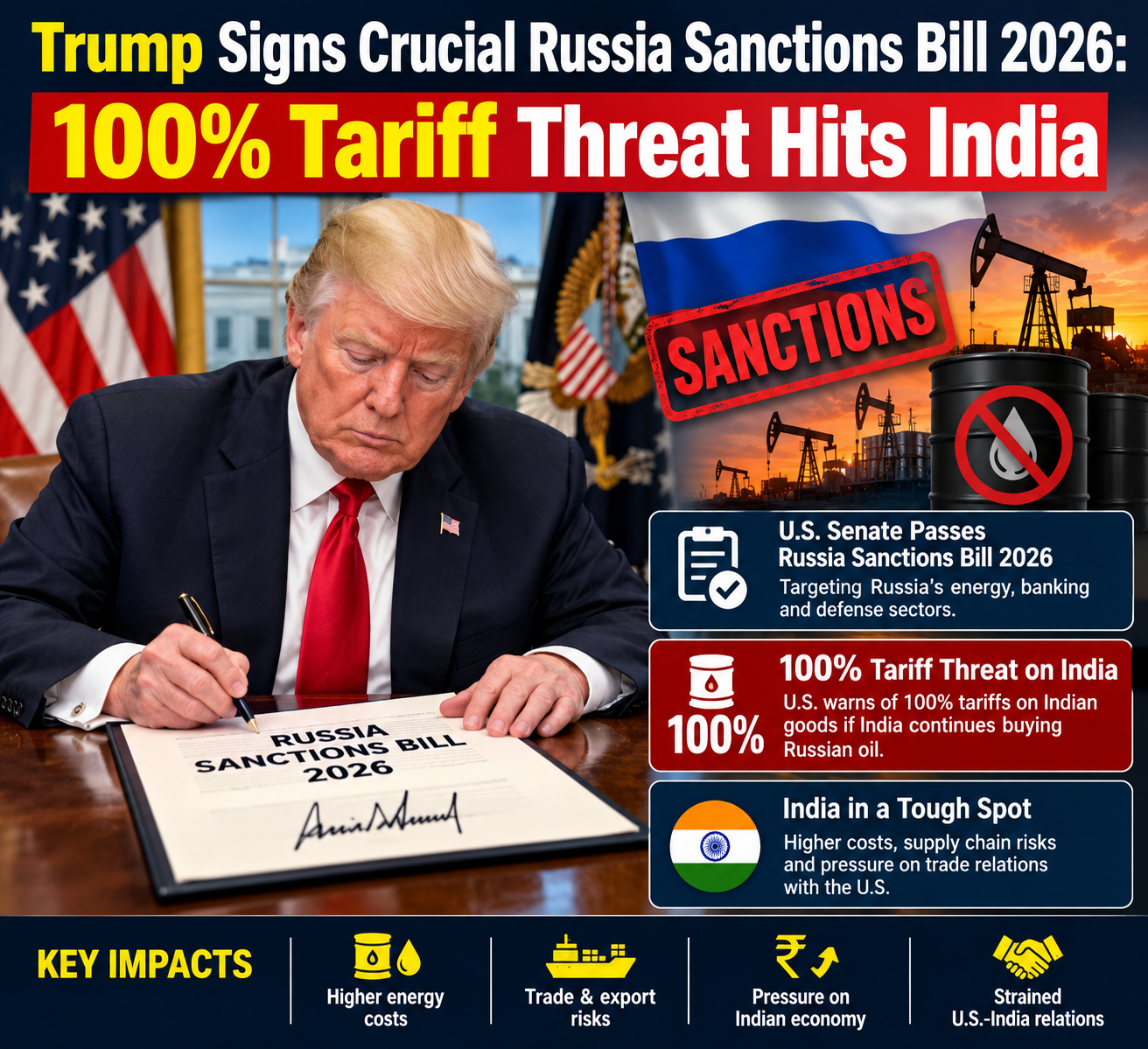
In a major geopolitical development, US President Trump Signs Crucial Russia Sanctions Bill 2026 the Lindsey O. Graham Sanctioning Russia and Iran Act of 2026 into law on Friday, September 18, 2026. The landmark legislation expands economic pressure on Moscow and Iran while giving the White House statutory authority to impose tariffs of up to 100 percent on major buyers of Russian oil and natural gas.
The legislative push follows a 262–159 vote in the Republican-led House of Representatives earlier in the week, after an 86–11 bipartisan clearance in the Senate. Named in memory of Senator Lindsey Graham, who passed away in July 2026, the law targets Russia’s military funding channels, shadow tanker fleets, energy operators, and global trade enablers.
With major importers like India and China now facing heavy trade risks, international supply lines and bilateral trade negotiations face immediate turbulence.
Key Highlights of the Act
Energy Tariffs: Authorizes tariffs of up to 100% on goods from top purchasers of Russian crude oil and natural gas.
Direct Russian Penalties: Enforces up to 500% duties on direct imports of Russian origin goods.
Shadow Fleet Suppression: Enacts strict sanctions against vessel owners, managers, and insurers facilitating illegal energy movements.
Iran Extension: Reauthorizes the statutory provisions of the Iran Sanctions Act for an additional five years, through 2031.
Executive Discretion: Grants the US President authority to choose whether to levy tariffs, determine rates, or grant national interest waivers.
The Legal Framework & Tariff Authority
The Lindsey O. Graham Sanctioning Russia and Iran Act of 2026 establishes a recurring review process requiring the US Trade Representative to assess top energy buyers every 180 days.
LEGISLATIVE IMPLEMENTATION TIMELINE

          │
          ├─► August 7, 2026: US Senate clears S. 5025 (86-11)
          │
          ├─► September 16, 2026: House of Representatives passes Act (262-159)
          │
          ├─► September 18, 2026: Signed into law by President Donald Trump
          │
          └─► October 18, 2026: statutory provisions take official effect (30-day buffer)
The executive branch holds wide latitude over enforcement. While the law mandates tariffs of up to 100% on the top five volume importers, discretionary waiver provisions allow the administration to pause duties if certified as beneficial to US national security interests.
Implications for India & Global Importers
India relies heavily on foreign energy, importing over 88% of its domestic crude requirements. Russian supplies accounted for approximately 35% to 40% of Indian crude inflows in recent cycles, making New Delhi vulnerable under top-five buyer calculations.
| Country | Primary Energy Imports | Potential US Duty Exposure | Statutory Status |
| China | Crude Oil & Natural Gas | Up to 100% | Eligible for Top-5 List |
| India | Seaborne Crude Oil | Up to 100% | Eligible for Top-5 List |
| Slovakia | Natural Gas Pipeline | Up to 100% | Exemption Eligible (<15% gas rule) |
| Hungary | Pipeline Oil & Gas | Up to 100% | Exemption Eligible (<15% gas rule) |
| Azerbaijan | Transit / Refined Energy | Up to 100% | Under Review |
An exemption clause exists for natural gas buyers whose imports remain below 15% of total Russian exports, provided they demonstrate active reduction steps. However, crude oil importers face steeper compliance bars with fewer automatic protections.
India’s Official Response & Economic Strategy
New Delhi responded firmly following congressional clearance of the legislation. In a formal release, the Ministry of External Affairs reaffirmed its commitment to national interest and energy access.
“As stated on several earlier occasions, India remains firmly committed to ensuring energy security for its 1.4 billion people. It will continue to do so through diversified sourcing and based on evolving market dynamics.”
— Ministry of External Affairs, New Delhi
Indian diplomats underlined that bilateral trade talks with Washington must account for global market stability. Removing Russian crude entirely would create severe supply deficits, driving up global oil prices and increasing inflationary pressure worldwide.
Broader Economic Impact & Industry Outlook
Trade analysts note that this statutory authority creates a permanent bargaining tool for Washington during ongoing trade negotiations. Unlike earlier tariffs based on emergency executive powers, Congress-backed legislation gives the administration a firm legal foundation that is resistant to court challenges.
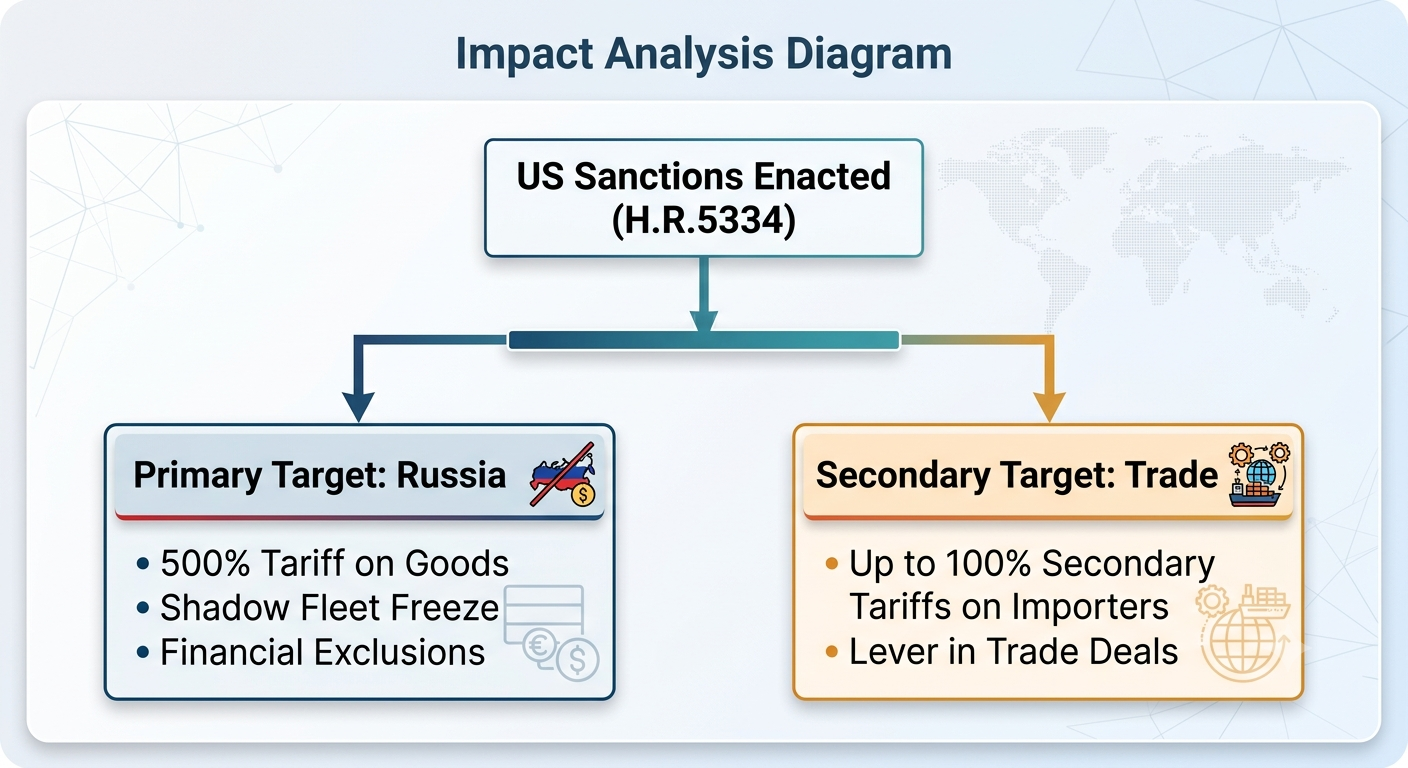
Refiners across Asia and Europe are currently reassessing supply contracts ahead of the 30-day enforcement window. While some energy firms may seek waivers or request larger discounts from Russian suppliers to offset tariff risks, others are preparing strategic reserves to prevent potential trade disruptions.
What Comes Next for Global Trade
While the law grants broad authorization, the actual implementation, targeted sectors, and specific tariff rates remain entirely at presidential discretion. The administration retains the authority to issue national interest waivers to prevent unintended disruptions across broader international trade networks.
How Washington applies this statutory tool in the coming months will play a decisive role in shaping the direction of international trade policy, global energy distribution, and key bilateral relationships.